
Learn kinematics
4 expert-rated courses covering kinematics. Compared by rating, price, difficulty, and job relevance so you can pick the right one.
Kinematics expertise is in high demand across industries like robotics, aerospace, automotive, and industrial automation. Jobs requiring Kinematics skills can command a 15-25% salary premium, and the job market is expected to grow 18-22% annually through 2026 as AI/ML-driven systems become ubiquitous.
Catalog analysis updated . Ratings are independent editorial scores. Read the rating methodology.
Key Facts About kinematics
- 1Kinematics describes motion using 3 fundamental quantities: position, velocity, and acceleration.
- 2Kinematic equations relate these 3 quantities and can be used to model the motion of objects under constant acceleration.
- 3Kinematics is a core foundation for robotics, allowing the prediction and control of a robot's movement through space.
- 4Kinematic analysis is essential for trajectory planning in self-driving cars, drones, and other autonomous vehicles.
- 5Modern Kinematics leverages tools like Lagrangian mechanics, screw theory, and Lie groups to model more complex motions.
Top kinematics Courses
Modern Robotics, Course 1: Foundations of Robot Motion
Explore the mathematics and algorithms behind modern robotic systems including kinematics, dynamics, and motion planning. This comprehensive course provides theoretical foundations and practical applications for designing and controlling sophisticated robots.
ROS 2 Moveit 2 - Control a Robotic Arm
Create your own 6 axis robotic arm and control it with ROS 2 and MoveIt 2. Step by step, from URDF to Hardware.
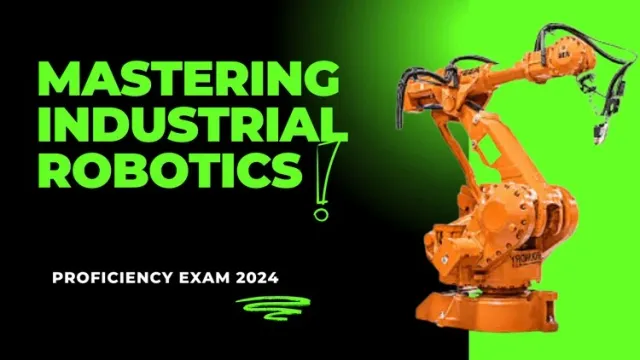
Industrial Robotics
Mathematical models and practical applications for industrial robotics programming.
Modern Robotics: Mechanics, Planning, and Control
Comprehensive robotics specialization from Northwestern University covering robot mechanics, kinematics, dynamics, motion planning, and control.
Pro Tips for Learning kinematics
- #1Start with the fundamentals - learn to model 1D and 2D motion using kinematic equations.
- #2Practice solving kinematic problems with pen and paper before moving to simulation tools.
- #3Focus on building intuition for how changes in position, velocity, and acceleration relate.
Why Learn kinematics?
- Kinematics skills are essential for careers in robotics, automation, aerospace, and automotive engineering.
- Understanding Kinematics allows you to design, control, and optimize the motion of mechanical systems.
- Mastering Kinematics gives you a competitive edge in the fast-growing job market for AI and robotics engineers.