
Learn Industrial Robotics
2 expert-rated courses covering Industrial Robotics. Compared by rating, price, difficulty, and job relevance so you can pick the right one.
Industrial Robotics skills are highly valued across sectors like automotive, electronics, aerospace, and logistics. Salaries for robotics engineers can exceed $100,000 in many markets, and demand is projected to grow 9% annually through 2026 as factories and warehouses automate more tasks. Complementary skills in areas like programming, sensors, and data analysis are also sought after.
Catalog analysis updated . Ratings are independent editorial scores. Read the rating methodology.
Key Facts About Industrial Robotics
- 1Industrial robots can increase manufacturing productivity by 30-50%.
- 2The global industrial robotics market is expected to reach $75 billion by 2026.
- 3Collaborative robots (cobots) designed to work alongside humans are the fastest-growing segment, growing 30% annually.
- 4Major industrial robot manufacturers include FANUC, ABB, KUKA, and Yaskawa.
- 5Key industrial robotics applications include pick-and-place, welding, material handling, and assembly.
Available on
Top Industrial Robotics Courses
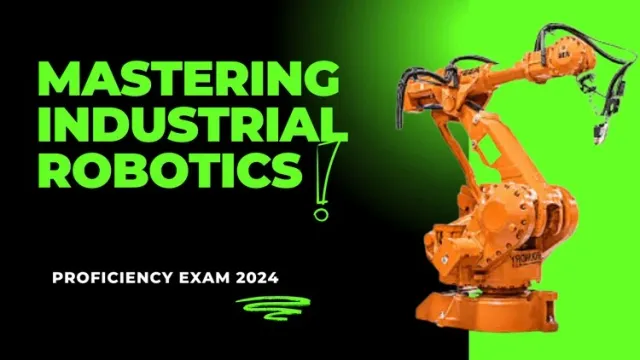
Industrial Robotics
Mathematical models and practical applications for industrial robotics programming.

Robotics: Vision Intelligence & Machine Learning
Master industrial robot programming with vision intelligence and machine learning integration for manufacturing and automation.
Pro Tips for Learning Industrial Robotics
- #1Start with the fundamentals of robot kinematics, sensors, and control systems.
- #2Practice programming industrial robots using simulators before hands-on training.
- #3Develop complementary skills in areas like PLC programming, machine vision, and data analysis.
- #4Get certified in specific robot brands or programming languages to enhance your marketability.
Why Learn Industrial Robotics?
- Learn in-demand skills for a fast-growing, high-salary field in automation and manufacturing.
- Develop expertise in programming, operating, and integrating industrial robots across industries.
- Gain a competitive edge for roles like robotics engineer, automation technician, or manufacturing supervisor.
- Be part of the digital transformation driving productivity and safety improvements in factories worldwide.