
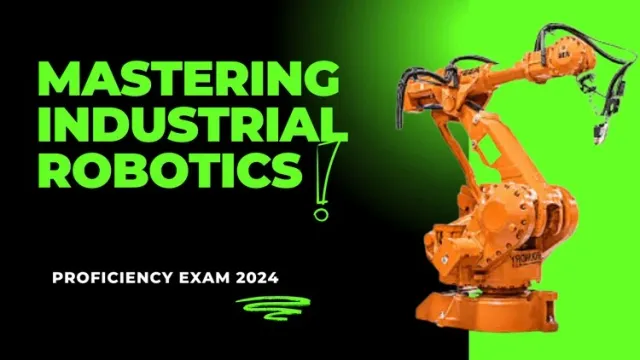
Industrial Robotics
Udemy · Fabrizio Frigeni · Updated
AI Tutor Rating
7.8/10
Duration
6 hours video
Classes
63
Mathematical models and practical applications for industrial robotics programming.
The Udemy course 'Industrial Robotics' by Fabrizio Frigeni is a focused, 6-hour video program that delivers a practitioner's introduction to the core mathematical and programming concepts behind robotic arms in manufacturing. The curriculum moves from foundational topics like robot kinematics and dynamics to advanced concepts and real-world application integration. This course serves technicians, engineers, and students who need to understand the theory and practical programming that underpin industrial automation, positioning it as a bridge between academic concepts and shop-floor implementation.
What you'll learn in Industrial Robotics
Our Review of Industrial Robotics
The Industrial Robotics course is structured around a clear, linear progression from introduction to application, as outlined in its seven curriculum chapters. The 63 lectures within a 6-hour total runtime suggest a dense, information-focused format where concepts are likely delivered concisely without extensive fluff. This structure is efficient for learners who prefer a direct, lecture-based approach to technical material. The teaching relies solely on video, which is effective for demonstrating mathematical models and programming logic but may lack the hands-on simulation or direct robot interaction some learners seek.
The depth of the material, as indicated by the learning outcomes to understand kinematics and dynamics and to program robots for manufacturing, suggests this is a serious technical primer rather than a superficial overview. The prerequisite of only basic mathematics is notable, implying the instructor aims to build complex understanding from a modest starting point, though learners without a technical mindset may still find the mathematical models challenging. Completing this course should equip a learner with the theoretical framework to interpret robotic movement, begin to apply kinematic calculations, and understand the programming logic used in industrial settings, forming a solid foundation for further on-the-job training or more advanced study.
The pricing at $11.99 and the inclusion of a certificate of completion create a high value proposition for the self-funded learner. At this price point, the course offers substantial specialized knowledge at minimal financial risk. The certificate provides a tangible record of the effort, which can be useful for demonstrating initiative in professional development, though its weight is typical of platform completion certificates rather than formal accreditation.
Pros and cons of Industrial Robotics
Pros
- Focuses on core mathematical models (kinematics/dynamics) essential for serious robotics work.
- Clear, application-oriented curriculum progressing from theory to real-world manufacturing programming.
- Extremely cost-effective at $11.99 for over six hours of specialized technical instruction.
- Includes a certificate of completion, adding formal recognition to the learning effort.
- Modest prerequisite of basic mathematics makes advanced concepts more accessible to dedicated beginners.
Things to consider
- Format is video-only, which may not suit learners who need interactive simulations or hands-on labs.
- The dense technical material packed into 63 short lectures requires sustained focus and self-discipline.
- Outcomes suggest theoretical and foundational competency; direct, immediate job-ready programming skill will require additional practical experience.
Who should take Industrial Robotics?
This course is best for technicians, engineering students, or early-career automation professionals who need a structured, theoretical grounding in industrial robotics. It fits learners comfortable with self-paced video study and basic mathematics, aiming to understand the 'why' behind robot programming for manufacturing before or alongside hands-on work.
Course curriculum for Industrial Robotics
Industrial Robotics at a glance
| Provider | Udemy |
|---|---|
| Instructor | Fabrizio Frigeni |
| Level | Intermediate |
| Time to complete | 6 hours video |
| Pricing | $11.99 |
| Certificate | Certificate |
| Prerequisites | Basic mathematics |
Fit
Best for
Not ideal for
The bottom line on Industrial Robotics
Fabrizio Frigeni's Industrial Robotics course delivers exceptional value as a concentrated primer on the mathematical foundations and programming logic of manufacturing robots. It is a strong, affordable starting point for building the theoretical knowledge required in the field, though learners should be prepared for its lecture-intensive format and plan to supplement it with practical experience.
Industrial Robotics: frequently asked questions
What exactly does the Industrial Robotics course on Udemy teach you?
The Industrial Robotics course teaches the mathematical models and practical applications for programming industrial robots, with a focus on understanding robot kinematics, dynamics, and their integration into manufacturing systems.
How difficult is the Industrial Robotics course, and what math do I need to know?
The course requires basic mathematics as a prerequisite. Its difficulty stems from applying these fundamentals to advanced concepts like kinematics and dynamics, making it challenging but accessible to technically-minded beginners.
Is the certificate from this Udemy Industrial Robotics course worth anything?
Yes, the included certificate of completion is worth documenting your professional development effort. It demonstrates you have completed a structured program on core robotics theory, which can be valuable for resumes and performance reviews.
How does this online course compare to a college class in industrial robotics?
Compared to a college class, this Udemy course is far shorter, more affordable, and focused purely on core mathematical models and programming applications, offering a streamlined, practical foundation without the breadth of a full semester.
What's the best way to get the most out of the Industrial Robotics course?
To get the most from this course, take detailed notes on the mathematical models, pause lectures to work through kinematic examples yourself, and actively relate each programming concept to a real-world manufacturing task you envision.