
Learn pandas
11 expert-rated courses covering pandas. Compared by rating, price, difficulty, and job relevance so you can pick the right one.
The SkillsetCourse catalog offers a diverse range of pandas courses across platforms like DataCamp, Coursera, and Skillshare. With three courses awarding certificates and one free option, learners have ample opportunities to deepen their understanding of pandas. Related skills such as Python, data analysis, and statistics complement the learning experience, ensuring a comprehensive skill set for aspiring data professionals.
Catalog analysis updated . Ratings are independent editorial scores. Read the rating methodology.
Key Facts About pandas
- 1Pandas is widely used for data manipulation and analysis in Python programming.
- 2The SkillsetCourse catalog includes 10 courses focused on pandas.
- 3Three courses offer certificates upon completion, enhancing career prospects.
- 4Pandas integrates well with other skills like data analysis and visualization.
- 5Free learning options are available, making pandas accessible to all learners.
Available on
Top pandas Courses
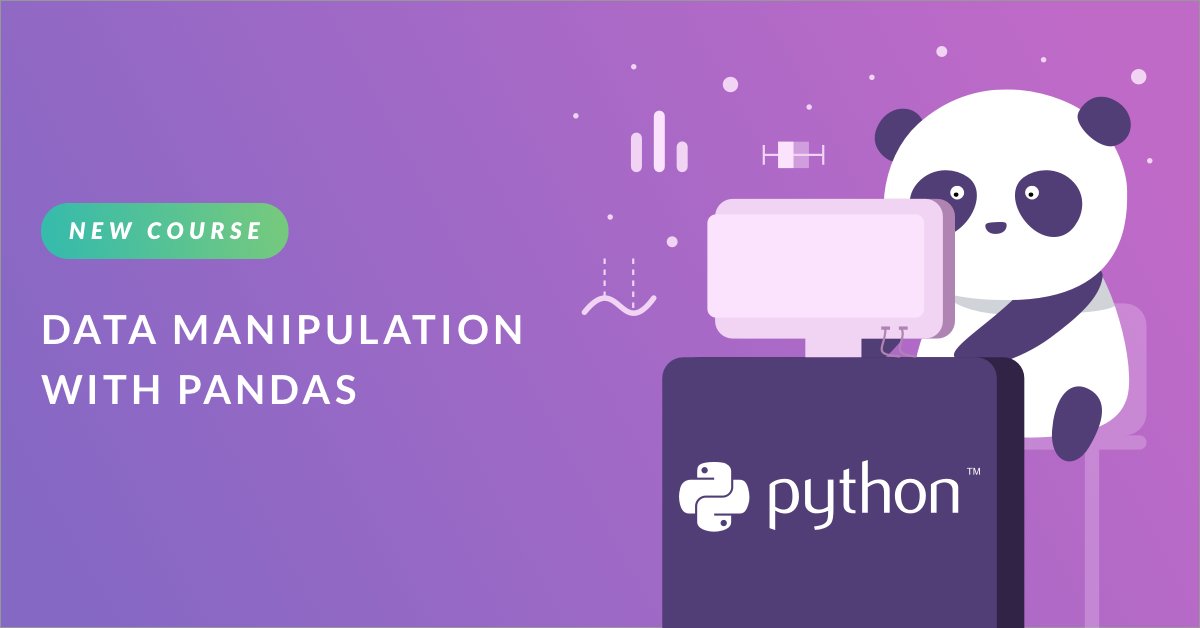
Data Manipulation with pandas
Master data manipulation with pandas. Learn to transform, aggregate, merge, and analyze data using Python's most popular data library.
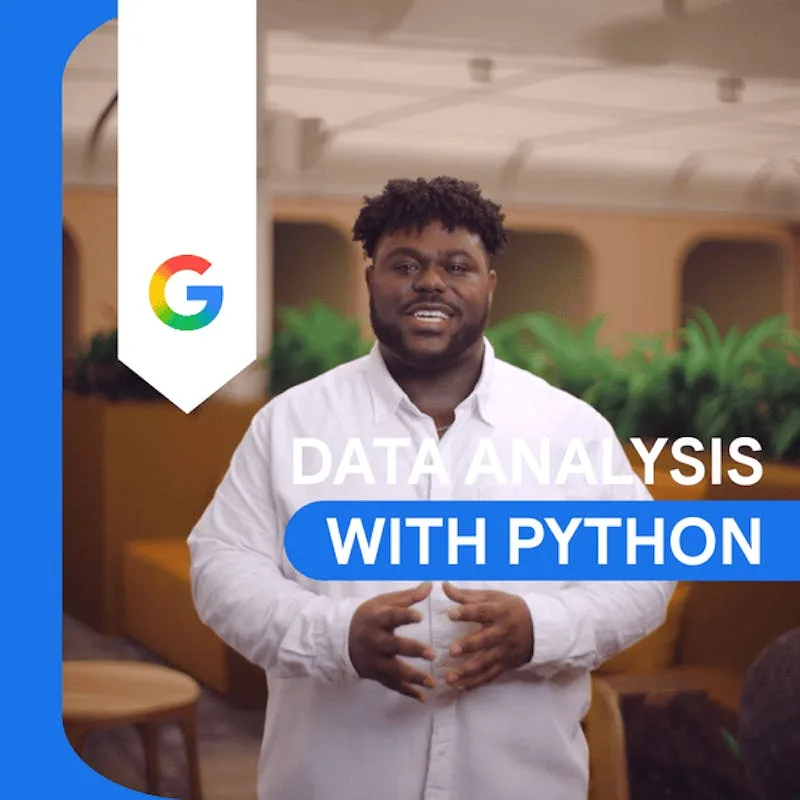
Google Data Analysis with Python
In today's data-driven world, Python is an essential tool for unlocking insights. This Specialization will guide you from a Python beginner to someone who can confidently apply Python to solve complex data problems. You'll gain hands-on experience with core Python syntax, data structures, and essential libraries like NumPy and pandas. Google experts will guide you through this Specialization by providing hands-on activities that simulate relevant tasks, sharing examples from their day-to-day work, and helping you enhance your data analytics skills to prepare for your career. You will learn to: Frame analysis problems using structured thinking and SMART questions Write efficient Python code in Jupyter Notebooks, mastering variables, functions, and data structures Manipulate and analyze datasets with pandas and NumPy, learning to filter, group, and aggregate data Clean and prepare real-world data, handling missing values and validating data quality Summarize and interpret data using descriptive statistics to support business decisions By the time you're finished, you'll be able to confidently apply Python to solve complex data problems and communicate your findings to stakeholders.

Data Structures in Python
In this course, you’ll explore data structures in Python, which are methods of storing and organizing data in a computer. You’ll focus on data structures that are among the most useful for data professionals: lists, tuples, dictionaries, sets, and arrays. You’ll also discover how to categorize data using data loading, cleaning, and binning. Lastly, you’ll learn about two of the most widely used and important Python tools for advanced data analysis: NumPy and pandas. By the end of this course, you will be able to: • Explain how to manipulate dataframes using techniques such as selecting and indexing, boolean masking, grouping and aggregating, and merging and joining • Describe the main features and methods of core pandas data structures such as dataframes • Describe the main features and methods of core NumPy data structures such as arrays and series • Define Python tools such as libraries, packages, modules, and global variables • Describe the main features and methods of built-in Python data structures such as lists, tuples, dictionaries, and sets
Python for Applied Data Science & AI
Master Python programming for data science and AI applications with practical examples and projects. Learn essential libraries like NumPy, pandas, and scikit-learn for data manipulation and analysis. Perfect foundation for anyone entering the data science or AI field.
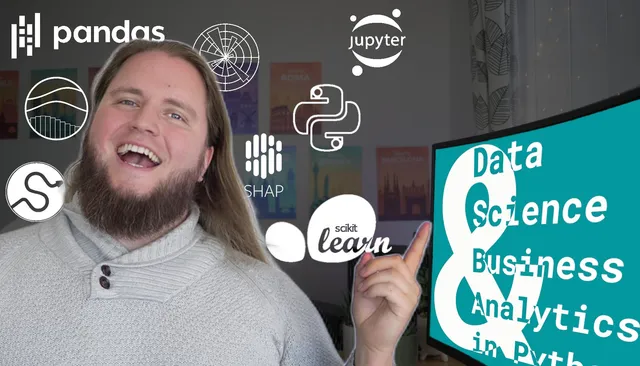
Data Science and Machine Learning with Python
By the end of this class, you will not only have a solid understanding of data science and analytics but also be able to quickly learn new libraries and tools.
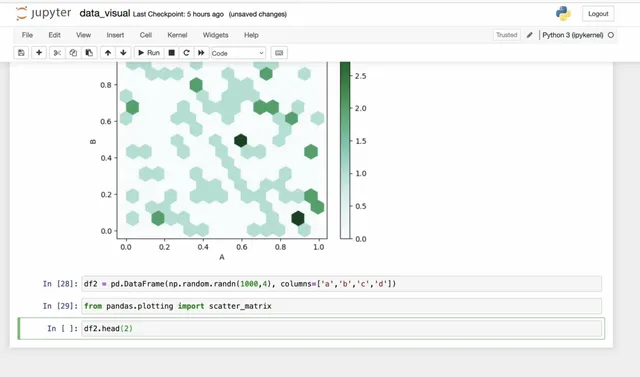
Pandas for Data Analysis: Master Data Handling in Python
This course covers everything from setting up your working environment with Anaconda and Jupyter Notebook to mastering the core features of Pandas.
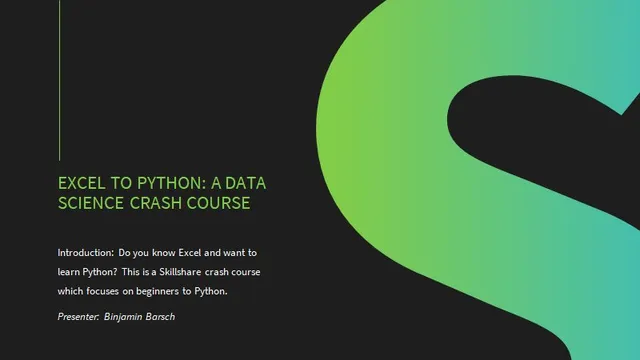
Excel to Python: A Data Science Crash Course
Introduction: Do you do data science with Excel and then Python? And welcome to a Skillshare crash course where you will learn the fundamentals of Python for ...
Data Visualization with Matplotlib: From Basics to Advanced ...
In this course, you'll master data visualization using Matplotlib, one of the most powerful libraries in Python.
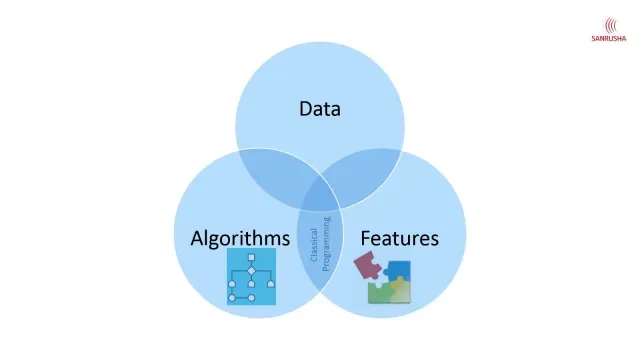
Machine Learning with Python and Scikit-learn for absolute beginners
This course covers how to build Machine Learning models from scratch using Python and Scikit-learn libraries. Course structure is captured below.
Python For Beginners: Master the Essential Basics of Python
By learning Python, you're preparing yourself for a future in: Data Science and Analytics: Process, analyze, and visualize data to make smarter decisions.
The No-Code Data Science Masterclass for Business Analysts ...
We will cover the expectations, steps, and vocabulary needed to make data-driven decisions. This class is tool-agnostic and can be applied in multiple contexts ...
Pro Tips for Learning pandas
- #1Start with the 'Data Manipulation with pandas' course on DataCamp to build foundational skills.
- #2Practice regularly with real datasets to reinforce your understanding of pandas functionalities.
- #3Explore related skills like Python and data visualization to complement your pandas training.
- #4Join online forums or study groups to discuss pandas challenges and solutions with peers.
Why Learn pandas?
- Learning pandas enhances data analysis skills, crucial for careers in data science and analytics.
- Pandas is essential for automating data manipulation tasks, increasing efficiency in data workflows.
- Proficiency in pandas can lead to better job opportunities in the tech and data sectors.
- Understanding pandas can improve your ability to visualize and interpret complex datasets.