
Learn SLAM
5 expert-rated courses covering SLAM. Compared by rating, price, difficulty, and job relevance so you can pick the right one.
SLAM skills are in high demand across robotics, autonomous vehicle, and industrial automation roles, which are projected to see 20-30% annual growth through 2026. Proficiency in SLAM can boost salaries by $10,000-$20,000 per year, making it a valuable investment for engineers and technicians.
Catalog analysis updated . Ratings are independent editorial scores. Read the rating methodology.
Key Facts About SLAM
- 1SLAM allows robots to build a map of their surroundings in real-time using sensors like cameras and lidars.
- 2Key SLAM algorithms include Extended Kalman Filters, Particle Filters, and Graph-based SLAM.
- 3Popular open-source SLAM frameworks include ROS-based systems like GMapping, Cartographer, and ORB-SLAM.
- 4SLAM enables critical autonomous capabilities like navigation, object avoidance, and indoor mapping.
- 5Real-time SLAM is a computationally intensive task, requiring efficient implementation on embedded hardware.
Top SLAM Courses
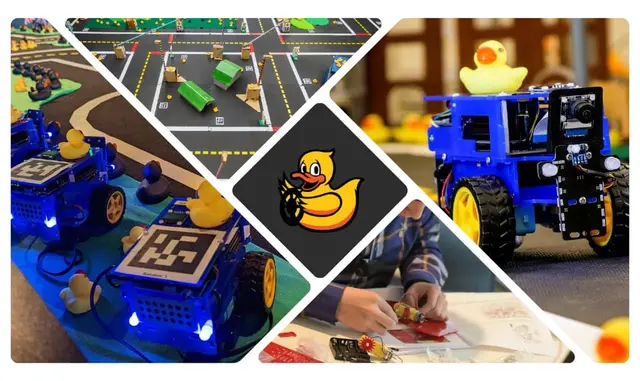
Robotics MicroMasters: Autonomous Navigation
Learn autonomous robot navigation through SLAM, path planning, and motion control. University-level robotics course.

Self Driving and ROS 2 - Map & Localization
Create a ROS2 Self-Driving robot with Python and C++. Master Robot Localization, Mapping and SLAM.
Self-Driving Cars Specialization - Sensor Fusion
State estimation and localization for self-driving cars from University of Toronto covering Kalman filters, LiDAR, and sensor fusion techniques.
Kalman Filters & State Estimation for Robotics
Comprehensive course on Kalman filters, extended Kalman filters, and unscented Kalman filters for robotics state estimation and tracking.
ROS 2 Nav2 - SLAM and Navigation
Finally Understand the Nav2 Stack with ROS2. SLAM, Mapping, Navigation, Gazebo Simulation, Python Code step by step.
Pro Tips for Learning SLAM
- #1Start with an introductory course to understand core SLAM concepts and algorithms.
- #2Practice implementing SLAM using open-source frameworks like ROS2 and Cartographer.
- #3Learn complementary skills like sensor fusion, state estimation, and motion planning for a well-rounded robotics skillset.
Why Learn SLAM?
- SLAM skills are in high demand for robotics, self-driving cars, and autonomous drone roles, which are rapidly growing fields.
- Proficiency in SLAM can boost your salary by $10,000-$20,000 per year in relevant engineering positions.
- Learning SLAM opens the door to developing your own robotic and autonomous systems projects.