
Learn Self-Driving
6 expert-rated courses covering Self-Driving. Compared by rating, price, difficulty, and job relevance so you can pick the right one.
Self-driving skills are required for roles like autonomous vehicle engineer, robotic perception specialist, and navigation systems developer. Professionals with this expertise can command a 20-35% salary premium and enjoy 40%+ job growth over the next 3-5 years. Complementary skills in machine learning, robotics, and urban planning are highly valued.
Catalog analysis updated . Ratings are independent editorial scores. Read the rating methodology.
Key Facts About Self-Driving
- 1Self-driving vehicles use LiDAR, radar, and cameras to perceive their environment and GPS/INS for localization.
- 2The global self-driving car market is projected to grow from $54 billion in 2022 to $163 billion by 2026.
- 3Top self-driving companies include Waymo, Cruise, Argo AI, Aurora, and Zoox.
- 4Key self-driving algorithms include Kalman filters, particle filters, and Monte Carlo localization.
- 5Sensor fusion combines data from multiple sensors to create a comprehensive environmental model.
Top Self-Driving Courses
AI Trends 2026 Complete Mastery - Essential Knowledge
Comprehensive course covering AI trends and developments expected in 2026, including autonomous systems and self-driving technology. Explore future AI applications through role-play scenarios and practical insights into emerging AI paradigms.
Self Driving and ROS 2 - Map & Localization
Create a ROS2 Self-Driving robot with Python and C++. Master Robot Localization, Mapping and SLAM.
Self-Driving Cars Specialization
Comprehensive specialization from University of Toronto covering autonomous vehicle perception, planning, control, and safety systems.
Introduction to Self-Driving Cars
Learn the fundamentals of self-driving car technology including control systems, safety assurance, and software architecture.
Self-Driving Cars Specialization - Sensor Fusion
State estimation and localization for self-driving cars from University of Toronto covering Kalman filters, LiDAR, and sensor fusion techniques.
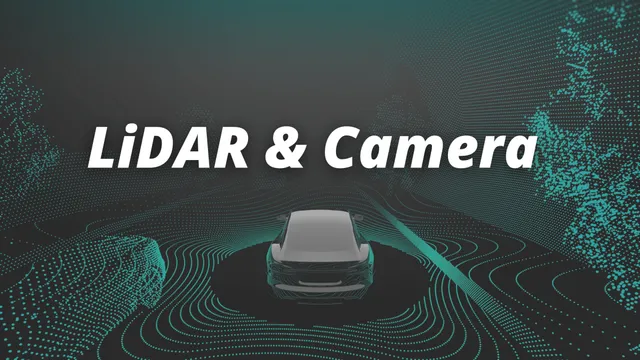
Sensor Fusion: LiDAR, Camera and Radar for Self-Driving
Master multi-sensor fusion for autonomous vehicles: combine LiDAR point clouds, camera images, and radar data for robust perception.
Pro Tips for Learning Self-Driving
- #1Focus on developing strong foundations in computer vision, sensor fusion, and control theory.
- #2Get hands-on experience with ROS 2, the open-source robotics framework for self-driving.
- #3Build a portfolio of self-driving projects, from simulations to prototype vehicle integrations.
- #4Network with self-driving experts and stay up-to-date on the latest industry trends and technologies.
Why Learn Self-Driving?
- Master cutting-edge AI and robotics technologies with high commercial demand.
- Work on complex, high-impact problems in transportation, logistics, and smart cities.
- Gain a competitive edge for in-demand roles like autonomous vehicle engineer or robotics specialist.
- Earn a 20-35% salary premium over traditional automotive or software engineering roles.