
Learn c-programming
3 expert-rated courses covering c-programming. Compared by rating, price, difficulty, and job relevance so you can pick the right one.
C Programming is a foundational skill for roles in software engineering, embedded systems, and computer hardware. Proficiency in C can boost salaries by 15-30% and is one of the fastest-growing job requirements, with a projected 22% increase in demand by 2026.
Catalog analysis updated . Ratings are independent editorial scores. Read the rating methodology.
Key Facts About c-programming
- 1C Programming was developed at Bell Labs in 1972 by Dennis Ritchie and is the basis for many modern programming languages.
- 2C is a statically-typed, procedural language that provides low-level access to memory and hardware, making it ideal for system software and embedded applications.
- 3Key features of C include pointers, manual memory management, and a small standard library, requiring developers to write more code 'from scratch'.
- 4C compilers are available for a wide range of platforms, from desktop computers to microcontrollers, making it a universal language for cross-platform development.
- 5Despite its age, C remains one of the most widely-used programming languages, powering the Linux kernel, the Python interpreter, and countless other mission-critical systems.
Top c-programming Courses
Embedded Software Hardware
Learn the fundamentals of embedded systems by exploring the interaction between software and hardware components. This course covers microcontroller programming, hardware interfacing, and real-time systems design principles essential for embedded development.
ARM Cortex Fundamentals: Building Embedded Systems
Master ARM Cortex processor architecture and develop embedded systems using ARM-based microcontrollers. Learn assembly language, C programming, and hardware abstraction layers for professional embedded development.
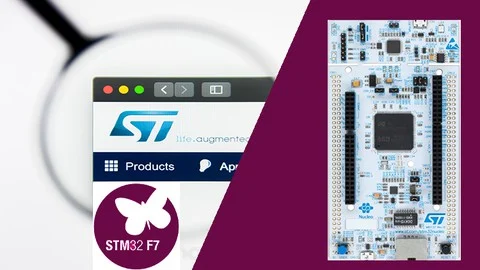
Embedded Systems Bare-Metal Programming Ground Up (STM32)
Master embedded systems programming from scratch using STM32 microcontrollers covering GPIO, timers, UART, SPI, I2C, and DMA.
Pro Tips for Learning c-programming
- #1Start with C programming basics like data types, control structures, and functions before moving on to more advanced topics like pointers and memory management.
- #2Practice implementing classic algorithms and data structures from scratch to solidify your understanding of how C works under the hood.
- #3Complement your C learning with hands-on projects targeting embedded systems, such as programming for microcontrollers like the Arduino or Raspberry Pi.
Why Learn c-programming?
- Master the fundamentals of programming logic and computer architecture, providing a strong foundation for learning other languages.
- Develop highly efficient, performance-critical applications for domains like gaming, real-time systems, and scientific computing.
- Gain the skills to build embedded systems, device drivers, and low-level system software that form the backbone of modern technology.
AI Tools for c-programming
Apply your c-programming skills with these recommended tools: