
Learn Unsupervised Learning
4 expert-rated courses covering Unsupervised Learning. Compared by rating, price, difficulty, and job relevance so you can pick the right one.
Roles like Data Scientist, Machine Learning Engineer, and AI Architect increasingly require Unsupervised Learning skills. Professionals with this expertise can command 15-20% higher salaries, and job demand is projected to grow 23% annually through 2026.
Catalog analysis updated . Ratings are independent editorial scores. Read the rating methodology.
Key Facts About Unsupervised Learning
- 1Unsupervised Learning algorithms include k-means clustering, hierarchical clustering, principal component analysis (PCA), and autoencoders.
- 2Unsupervised Learning powers mission-critical AI applications like anomaly detection, recommendation systems, and image/text feature extraction.
- 3Top Unsupervised Learning tools include scikit-learn, TensorFlow's Keras, PyTorch, and the R packages 'cluster' and 'factoextra'.
- 4Unsupervised Learning is a foundational technique for advanced AI like generative models, reinforcement learning, and self-supervised learning.
- 5Leading companies like Amazon, Netflix, and Spotify heavily rely on Unsupervised Learning for personalization, fraud detection, and predictive maintenance.
Top Unsupervised Learning Courses
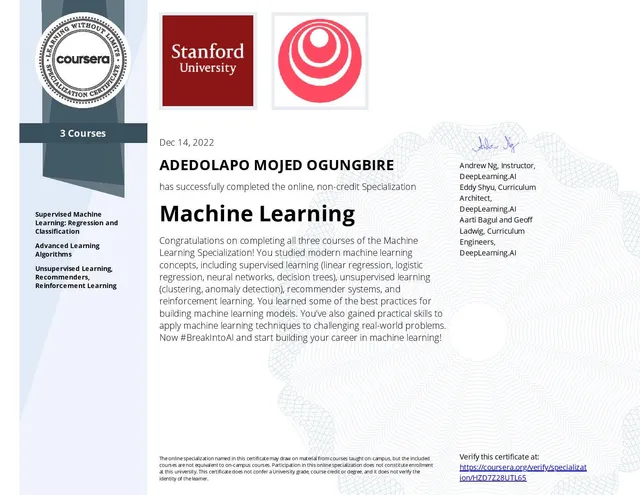
Machine Learning Specialization
Beginner-friendly three-course program covering supervised and unsupervised learning, neural networks, recommender systems, and best practices.
Understanding Machine Learning
Learn machine learning fundamentals. Understand supervised, unsupervised, and reinforcement learning concepts with practical examples.
Fundamentals of Machine Learning and Artificial Intelligence
Build a strong foundation in machine learning and AI with comprehensive coverage of algorithms, models, and practical implementations. Learn supervised and unsupervised learning techniques with hands-on projects. Perfect for aspiring data scientists and AI professionals.
Machine Learning
This comprehensive machine learning course covers algorithms, optimization, and practical implementations with extensive hands-on projects. Master both classical ML and modern deep learning approaches used in industry. One of the most popular and highly-rated ML courses globally.
Pro Tips for Learning Unsupervised Learning
- #1Start with intuitive algorithms like k-means clustering to build fundamental Unsupervised Learning skills
- #2Practice on real-world datasets and competitions to develop hands-on experience and problem-solving abilities
- #3Complement Unsupervised Learning with supervised techniques like classification and regression for end-to-end ML pipelines
Why Learn Unsupervised Learning?
- Unlock in-demand AI skills to boost your career prospects and earning potential
- Gain the ability to surface hidden insights from vast, unstructured datasets
- Develop versatile problem-solving skills applicable across industries and domains