
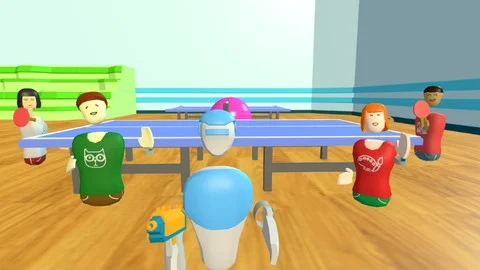
Multiplayer Virtual Reality (VR) Development With Unity
Udemy · Tevfik Ufuk Demirbaş · Updated
AI Tutor Rating
8.2/10
Duration
9.5 hours video
Classes
61
Learn the basics of Multiplayer Virtual Reality by building a fully functional project from scratch using Unity and networking.
Multiplayer Virtual Reality (VR) Development With Unity on Udemy is a 9.5-hour video course taught by instructor Tevfik Ufuk Demirbaş. It focuses on building networked virtual reality experiences from scratch using Unity. The course covers fundamentals, networking in practice, designing VR interactions with the Unity XR Toolkit, and advanced topics. It serves learners aiming to create multiplayer VR and metaverse applications, assuming they already possess basic Unity knowledge.
What you'll learn in Multiplayer Virtual Reality (VR) Development With Unity
Our Review of Multiplayer Virtual Reality (VR) Development With Unity
The course structure is project-focused, promising a fully functional build from scratch. With 61 lectures organized into seven curriculum chapters, it moves from fundamentals to applied multiplayer work and advanced topics. This suggests a comprehensive, hands-on journey through the specific stack of Unity, XR Toolkit, and networking. The teaching format is purely video-based, totaling 9.5 hours, which is a substantial but manageable commitment for a focused technical skill.
The depth appears significant given the advanced outcomes of building multiplayer VR applications, yet the prerequisite is only basic Unity knowledge. This indicates the course is designed to lift a beginner-intermediate Unity user into a specialized, in-demand niche. The $12.99 pricing for Udemy courses is standard and represents strong value for this volume of specialized instruction, especially paired with a completion certificate that can validate the learned skill set for professional profiles.
Pros and cons of Multiplayer Virtual Reality (VR) Development With Unity
Pros
- Project-based curriculum focused on building a complete multiplayer VR application from scratch
- Comprehensive coverage of both VR interaction design (Unity XR Toolkit) and multiplayer networking
- Structured progression from fundamentals to advanced topics across 61 detailed lectures
- Strong value proposition with 9.5 hours of specialized content at a typical Udemy price point
- Includes a certificate of completion for professional or resume validation
Things to consider
- Requires basic Unity knowledge as a prerequisite, not suitable for absolute beginners
- Learning format is exclusively video lectures, with no mention of supplementary text or code exercises
- Depth in advanced networking or VR optimization may be limited by the 9.5-hour total runtime
Who should take Multiplayer Virtual Reality (VR) Development With Unity?
This course best fits Unity developers with basic proficiency who want to pivot or specialize into the multiplayer VR space. It is ideal for indie developers, programmers in gaming, or technologists aiming to build metaverse-like applications, as it provides a direct, project-based path to a demonstrable and market-relevant skill.
Course curriculum for Multiplayer Virtual Reality (VR) Development With Unity
Multiplayer Virtual Reality (VR) Development With Unity at a glance
| Provider | Udemy |
|---|---|
| Instructor | Tevfik Ufuk Demirbaş |
| Level | Intermediate |
| Time to complete | 9.5 hours video |
| Pricing | $12.99 |
| Certificate | Certificate |
| Prerequisites | Basic Unity knowledge |
Fit
Best for
Not ideal for
The bottom line on Multiplayer Virtual Reality (VR) Development With Unity
Multiplayer Virtual Reality (VR) Development With Unity delivers targeted, practical education in a high-growth niche. It offers good depth for its prerequisite level and represents strong value for the price, especially for learners seeking a structured project to break into networked VR development.
Multiplayer Virtual Reality (VR) Development With Unity: frequently asked questions
What exactly will I learn in the Multiplayer Virtual Reality (VR) Development With Unity course?
You will learn to build multiplayer VR and metaverse applications from scratch. The curriculum covers Unity XR Toolkit for VR interactions, networking for multiplayer functionality, and techniques to create complete networked virtual reality experiences.
How much prior experience with Unity do I need for this VR development course?
The course lists basic Unity knowledge as a prerequisite. It is not designed for absolute beginners but for those who already understand Unity's core interface and workflow before tackling VR and multiplayer networking.
Does the Udemy course Multiplayer Virtual Reality (VR) Development With Unity provide a certificate?
Yes, the course offers a certificate of completion. This certificate can be used to validate your newly acquired skills in multiplayer VR development for professional or learning portfolios.
How does this course compare to other VR development courses that don't cover multiplayer?
This course is specifically focused on the added complexity of networking in virtual reality. Unlike general VR courses, it teaches you to design interactions and build experiences where multiple users can connect and interact in a shared virtual space.
What is the best way to get the most value from this multiplayer VR development course?
To get the most value, follow along actively by building the project from scratch as instructed. Having your basic Unity knowledge solidified beforehand will allow you to focus on the new concepts of VR interaction design and multiplayer networking.