
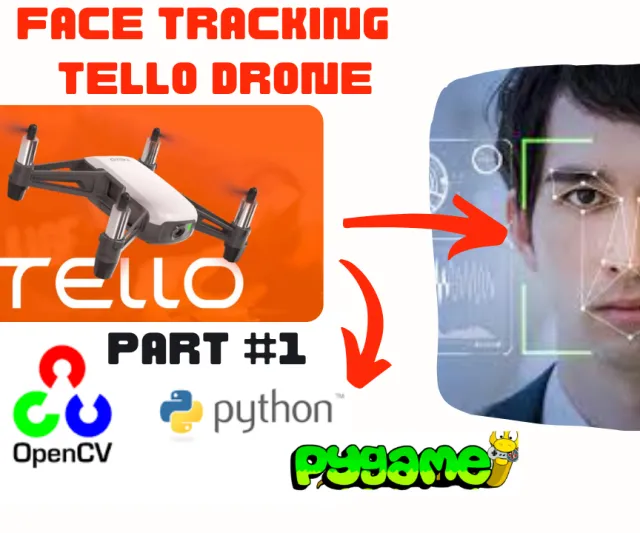
Drone Programming with Python - Face Recognition & Tracking
Udemy · Murtaza Hassan · Updated
AI Tutor Rating
7.8/10
Duration
3 hours video
Classes
22
Program DJI Tello drones with Python for autonomous flight, computer vision, face recognition, and object tracking applications.
Drone Programming with Python - Face Recognition & Tracking is a 3-hour Udemy course taught by Murtaza Hassan that teaches hands-on drone automation. The course uses the DJI Tello drone platform to cover autonomous flight, computer vision, face recognition, and object tracking applications using Python. It serves learners interested in robotics, hardware, and drone engineering who want to move beyond basic piloting to program flight controllers, navigation systems, and integrate computer vision on aerial platforms, with a capstone project tying the concepts together.
What you'll learn in Drone Programming with Python - Face Recognition & Tracking
Our Review of Drone Programming with Python - Face Recognition & Tracking
The Drone Programming with Python - Face Recognition & Tracking course is structured as a focused, project-driven tutorial. Its 22 lectures over 3 hours of video suggest a lean, no-frills format that prioritizes applied coding over theoretical deep dives. The curriculum moves from foundations and workflows to face recognition integration and a capstone project, indicating a logical progression where each module builds toward a tangible autonomous application. This structure is effective for learners who want to see immediate, practical results from their code on a physical drone.
The depth is appropriate for its stated prerequisite of basic Python knowledge, positioning it as an intermediate step into robotics and computer vision. The outcomes, which include programming flight controllers and designing multi-drone swarm coordination, suggest ambitious goals for a short course. In practice, a learner will likely gain the ability to control a Tello drone via Python, implement basic computer vision pipelines for recognition and tracking, and understand the workflow for integrating these systems. The $13.99 price and included certificate make this a low-risk entry point for hobbyists and students to validate a specific skill set, though the certificate's value is primarily personal motivation rather than formal accreditation.
Potential learners should note the course's scope is tightly coupled to the DJI Tello hardware. Success is contingent on owning or having access to this specific drone model to complete the hands-on projects. The course does not appear to cover alternative platforms or delve deeply into the underlying algorithms of computer vision, focusing instead on implementation. For the price, it delivers concentrated, practical knowledge but requires the learner to supply the critical hardware component.
Pros and cons of Drone Programming with Python - Face Recognition & Tracking
Pros
- Focused, project-based curriculum centered on a tangible capstone project.
- Practical application using the accessible and popular DJI Tello drone platform.
- Clear prerequisite requirement (Basic Python) sets realistic expectations for entry.
- Low financial barrier at $13.99 for specialized drone programming content.
- Includes a certificate of completion for personal achievement and motivation.
Things to consider
- Requires access to specific DJI Tello drone hardware for full participation.
- Short 3-hour duration may limit theoretical depth on computer vision algorithms.
- Curriculum scope is tied to a single drone model, limiting broader platform applicability.
Who should take Drone Programming with Python - Face Recognition & Tracking?
This course is best for hobbyists, computer science students, or developers with basic Python skills who own a DJI Tello drone and want a hands-on introduction to autonomous drone programming. It fits learners seeking a practical, project-focused tutorial to quickly implement face recognition and tracking, rather than a comprehensive theory course in robotics or computer vision.
Course curriculum for Drone Programming with Python - Face Recognition & Tracking
Drone Programming with Python - Face Recognition & Tracking at a glance
| Provider | Udemy |
|---|---|
| Instructor | Murtaza Hassan |
| Level | Intermediate |
| Time to complete | 3 hours video |
| Pricing | $13.99 |
| Certificate | Certificate |
| Prerequisites | Basic Python |
Fit
Best for
Not ideal for
The bottom line on Drone Programming with Python - Face Recognition & Tracking
Drone Programming with Python - Face Recognition & Tracking is a cost-effective, hands-on tutorial that delivers on its promise to teach autonomous drone applications using the DJI Tello. Its value is high for learners with the required hardware, but the experience is incomplete without it. This course is a solid starting point for practical drone programming but not a deep dive into robotics engineering.
Drone Programming with Python - Face Recognition & Tracking: frequently asked questions
What is the main focus of the Drone Programming with Python - Face Recognition & Tracking course?
The main focus is programming DJI Tello drones with Python for autonomous flight, computer vision, face recognition, and object tracking applications, culminating in a capstone project.
What programming skill do I need before taking this drone programming course?
You need a basic understanding of Python, as this is the sole listed prerequisite for the Drone Programming with Python - Face Recognition & Tracking course.
Does the Udemy drone course offer a certificate and is the $13.99 price worth it?
Yes, the course offers a certificate of completion. For learners with a DJI Tello, the $13.99 price represents strong value for hands-on, project-based instruction in drone automation and computer vision.
How does this course compare to a general Python or computer vision course for learning drone programming?
Unlike a general course, Drone Programming with Python - Face Recognition & Tracking is specifically tailored to integrate Python and computer vision with the DJI Tello drone hardware for immediate, practical aerial application.
How can I get the most out of the Drone Programming with Python - Face Recognition & Tracking course?
To get the most from this course, ensure you have a DJI Tello drone ready for the hands-on projects and a firm grasp of basic Python to follow the practical coding examples for flight control and vision integration.