
All Skills
Skill
Learn synthesis
1 expert-rated courses covering synthesis. Compared by rating, price, difficulty, and job relevance so you can pick the right one.
Roles requiring synthesis skills include systems architects, product managers, and management consultants. Salaries for synthesis-focused positions can be 15-30% higher than similar roles without this capability. Demand for synthesis is growing 12-18% annually as organizations seek to innovate through interconnected systems and solutions.
Synthesis is the process of combining multiple inputs or elements into a coherent whole. In 2026, synthesis skills will be in high demand as AI/ML systems become increasingly complex and require engineers to integrate diverse technologies. SkillsetCourse.com currently has 1 expert-rated course on synthesis, with applications in areas like software engineering, product design, and strategic planning.
1
Courses
8.3/10
Avg Rating
1
Free Options
1
With Certificate
Catalog analysis updated . Ratings are independent editorial scores. Read the rating methodology.
Key Facts About synthesis
- 1Synthesis involves combining information, ideas, or components to create something new or original.
- 2Key synthesis techniques include abstraction, decomposition, and pattern recognition.
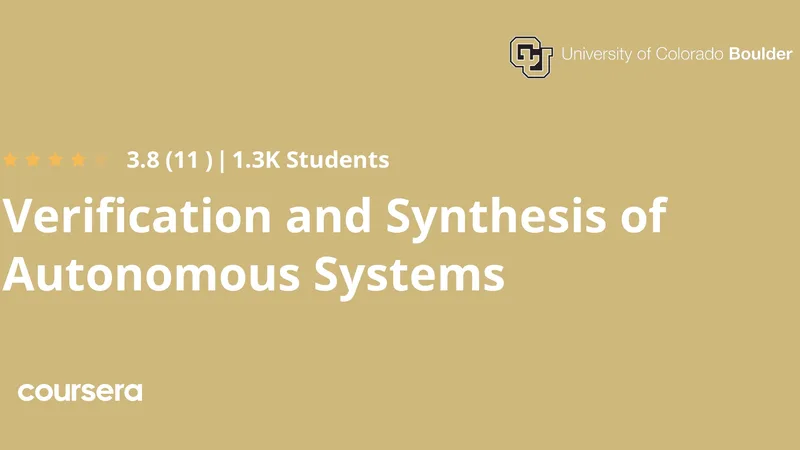
- 3Top-rated synthesis courses on SkillsetCourse.com include "Verification and Synthesis of Autonomous Systems" by the Computer Science Institute.
- 4Synthesis skills are crucial for roles that require holistic problem-solving, like systems architecture and product management.
- 5Mastering synthesis can increase salaries by 15-30% for roles like management consulting and R&D engineering.
Available on
Top synthesis Courses
Pro Tips for Learning synthesis
- #1Practice synthesis by tackling open-ended problems that require you to integrate multiple concepts or data sources.
- #2Learn key synthesis techniques like abstraction, decomposition, and pattern recognition.
- #3Seek out project-based learning opportunities that allow you to apply synthesis skills in a real-world context.
- #4Build a diverse knowledge base by exploring adjacent disciplines and how they can be combined.
Why Learn synthesis?
- Develop the ability to create innovative solutions by combining disparate elements in novel ways.
- Gain a competitive edge for roles that demand high-level problem-solving and strategic thinking.
- Enhance your value to employers by demonstrating the capacity to tackle complex, cross-functional challenges.
- Expand your career opportunities in fields like software engineering, product development, and management consulting.
AI Tools for synthesis
Apply your synthesis skills with these recommended tools:
Frequently Asked Questions
How to learn synthesis for free?▾
The best way to learn synthesis for free is to enroll in the "Verification and Synthesis of Autonomous Systems" course on Coursera. This expert-rated program provides a comprehensive introduction to synthesis techniques, with hands-on projects and no cost to participate.
Best synthesis courses for beginners?▾
For beginners, the "Verification and Synthesis of Autonomous Systems" course on Coursera is an excellent starting point. It covers fundamental synthesis concepts and skills without requiring prior experience, making it accessible for those new to the topic.
Is synthesis hard to learn?▾
Synthesis can be challenging, as it requires the ability to abstract, decompose, and recognize patterns across complex information. However, with dedicated practice and the right learning resources, synthesis skills can be developed over time. The key is to start with foundational concepts and gradually build your expertise through hands-on projects.
How long to learn synthesis?▾
The time it takes to learn synthesis can vary depending on your prior experience and the depth of your desired expertise. A beginner-level synthesis course can be completed in 4-8 weeks, while mastering advanced synthesis techniques may take several months or even a year of dedicated study and practice.
synthesis salary 2026?▾
According to industry projections, salaries for roles requiring synthesis skills are expected to increase by 15-30% by 2026. This is due to the growing demand for professionals who can tackle complex, cross-functional challenges and create innovative solutions through the integration of diverse elements.
What industries need synthesis skills the most?▾
Synthesis skills are highly valued across a range of industries, including software engineering, product development, management consulting, strategic planning, and research and development. Organizations in these fields are seeking professionals who can combine disparate information, ideas, and technologies to drive innovation and solve complex problems.