
Learn AI Ethics
10 expert-rated courses covering AI Ethics. Compared by rating, price, difficulty, and job relevance so you can pick the right one.
The SkillsetCourse catalog provides diverse options for learning AI ethics, featuring courses from platforms such as LinkedIn Learning and Coursera. Out of 15 courses, 4 are free, and 13 offer certificates upon completion. This variety allows learners to gain in-depth knowledge while exploring related skills like Risk Management and Compliance, ensuring a well-rounded education in AI ethics.
Catalog analysis updated . Ratings are independent editorial scores. Read the rating methodology.
Key Facts About AI Ethics
- 1AI ethics focuses on the moral implications of AI technologies and their societal impact.
- 2SkillsetCourse offers 15 courses specifically dedicated to AI ethics training.
- 3Out of 15 courses, 4 are available for free, making learning accessible.
- 413 courses provide certificates, enhancing professional credentials in AI ethics.
- 5Related skills such as Bias and Risk Management are critical for comprehensive understanding.
Top AI Ethics Courses

Responsible AI for Developers
This specialization equips developers with the essential knowledge and skills to build responsible AI systems by applying best practices of Fairness, Interpretability, Transparency, Privacy, and Safety. Throughout the courses, you will learn how to: Identify and Mitigate Bias: Learn to recognize and address potential biases in your machine learning models to mitigate fairness issues. Apply Interpretability Techniques: Gain practical techniques to interpret complex AI models and explain their predictions using Google Cloud and open source tools. Prioritize Privacy and Security: Implement privacy-enhancing technologies like differential privacy and federated learning to protect sensitive data and build trust. Ensure Generative AI Safety: Understand and apply safety measures to mitigate risks associated with generative AI models. By the end of this specialization, you will have a comprehensive understanding of responsible AI principles and the practical skills to build AI systems that are ethical, reliable, and beneficial to users.
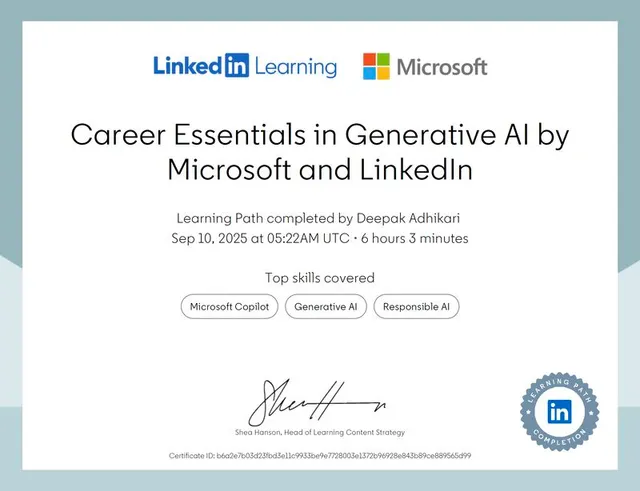
Career Essentials in Generative AI by Microsoft and LinkedIn
Learning path covering core generative AI concepts, Microsoft 365 Copilot usage, and ethics for day-to-day work.

Exploring Generative AI
Learning path introducing generative AI models, architecture, ethics, and practical prompt engineering techniques.
Intro to Generative AI
Beginner course introducing generative AI concepts, use cases, and ethical considerations with interactive practice.

AI Ethics for Professionals
Davidson College course on AI ethics covering bias, privacy, transparency, and accountability for professionals working with AI systems.

Using AI Responsibly - Microsoft Copilot Video Tutorial
Learn about AI fluency and why responsible AI use matters in your career. This video tutorial covers practical approaches to using AI tools like Microsoft Copilot ethically and effectively.
AI Ethics
Explore the ethical implications of AI. Learn about bias, fairness, transparency, privacy, and responsible AI development practices.
AAISM Success Blueprint | Certification Masterclass
Prepare for the ISACA Advanced in AI Security Management (AAISM) certification. Master AI security, risk management, and ethical governance in AI systems.

Introduction to Generative AI Learning Path
This learning path offers a comprehensive introduction to generative AI. This specialization explores the foundations of large language models (LLMs), their diverse applications, and the ethical considerations crucial for responsible AI development and deployment.
AI Ethics and Responsible AI
Explore AI ethics, bias detection, fairness frameworks, and responsible AI practices from key principles to practical implementation.
Pro Tips for Learning AI Ethics
- #1Start with foundational courses like 'AI Ethics' by DataCamp to build a strong understanding of ethical principles.
- #2Engage in discussions and case studies to deepen your grasp of real-world AI ethics applications.
- #3Explore related skills such as Bias and Responsible AI to enhance your knowledge and employability.
- #4Consider obtaining certificates from courses to validate your expertise in AI ethics for potential employers.
Why Learn AI Ethics?
- Understanding AI ethics is essential for professionals aiming to ensure responsible AI deployment in their organizations.
- Knowledge of AI ethics can enhance career prospects in fields like data science and AI governance.
- Learning AI ethics equips individuals to address ethical dilemmas in AI development and implementation.
- Professionals with AI ethics expertise can contribute to shaping policies and regulations in technology.