
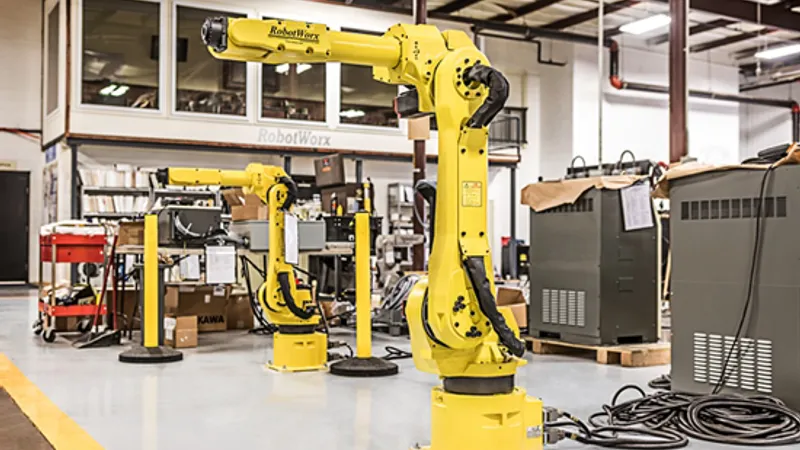
The global robotics market is projected to reach $500 billion by 2030, according to the International Federation of Robotics. But the career opportunity isn't just in building robots - it spans an entire ecosystem of hardware, software, operations, and maintenance roles. In 2026, robotics job postings are growing 28% year-over-year, outpacing every other engineering discipline.
Hottest Robotics Sub-Fields in 2026
ROS 2 Development
The Robot Operating System 2 is the industry standard for building robot applications - from warehouse AMRs (autonomous mobile robots) to surgical systems. ROS 2 developers are in extreme demand because the framework has a steep learning curve and the talent pool is small. Median salary: $140,000-$175,000.
Computer Vision for Robotics
Every autonomous system needs to perceive its environment. Robotics CV engineers specialize in real-time perception, 3D point-cloud processing, and sensor fusion - distinct from general CV roles. Median salary: $155,000-$200,000.
MLOps for Edge Robotics
Deploying and updating ML models on edge devices in real-time is a specialized discipline combining ML engineering with embedded systems. Think: model quantization, over-the-air updates, and inference monitoring on NVIDIA Jetson or custom silicon. Median salary: $160,000-$210,000.
Motion Planning & Control
Designing algorithms that make robots move smoothly and safely - from robotic arms in factories to humanoid locomotion. This sub-field requires strong math (optimization, kinematics). Median salary: $145,000-$190,000.
Smart Infrastructure & Digital Twins
IoT integration, digital twins, and smart city systems create a bridge between robotics and civil infrastructure. Median salary: $130,000-$165,000.
Companies Driving the Hiring Boom
- Amazon Robotics - 750,000+ robots deployed in fulfillment centers. Hiring robotics engineers, technicians, and control systems specialists at scale.
- Boston Dynamics (Hyundai) - Spot and Atlas have moved from research demos to commercial deployment. Adding 500+ engineers in 2026.
- Intuitive Surgical - The da Vinci surgical robot platform dominates robotic surgery. Growing clinical robotics and software engineering teams.
- Tesla (Optimus) - Humanoid robotics program hiring across perception, manipulation, and manufacturing.
- Agility Robotics - Digit, their bipedal warehouse robot, entered production. Hiring across the stack.
- John Deere / Caterpillar - Autonomous agriculture and construction equipment creating cross-industry robotics demand.
Career Trajectory: Junior to Principal
- Junior Robotics Engineer - $95K-$130K. ROS 2 development, simulation testing, sensor integration.
- Mid-Level - $135K-$175K. System-level design, perception or planning specialization, production deployment.
- Senior - $180K-$230K. Technical leadership, architecture decisions, cross-team coordination.
- Staff / Principal - $240K-$350K+ (total comp). Setting long-term technical direction, hiring, and mentoring.
Training ROI and Where to Start
Robotics training has the highest career ROI of any technical field due to extreme talent scarcity - there are roughly 3 open robotics positions for every qualified candidate. The learning path depends on your background: software engineers should start with ROS 2 and simulation; mechanical engineers should add Python and perception; and career changers can enter through robotics technician roles. Our catalog of 900+ expert-rated courses includes 185+ robotics and autonomous systems courses across the full stack, from beginner ROS 2 tutorials to advanced motion planning.