
All Skills
Skill
Learn Structured Outputs
1 expert-rated courses covering Structured Outputs. Compared by rating, price, difficulty, and job relevance so you can pick the right one.
Structured Outputs is an in-demand skill for roles in natural language processing, data analysis, and software engineering. Salaries for ML engineers and data scientists with Structured Outputs expertise can see a 15-30% uplift, as companies seek to automate more complex content-generation tasks. With the rapid growth of large language models, this skill is projected to be a must-have for many tech and analytics roles by 2026.
Structured Outputs refer to the process of training machine learning models to generate well-structured, coherent text outputs - such as paragraphs, tables, or code snippets - rather than just raw, unstructured text. This skill is crucial for 2026 as models become more advanced at tasks like automated writing, data summarization, and code generation. SkillsetCourse currently lists 1 expert-rated course on Structured Outputs, with key applications in natural language processing, business intelligence, and software engineering.
1
Courses
8.6/10
Avg Rating
1
Free Options
0
With Certificate
Catalog analysis updated . Ratings are independent editorial scores. Read the rating methodology.
Key Facts About Structured Outputs
- 1Structured Outputs allow ML models to generate coherent paragraphs, tables, and code - not just raw text.
- 2Key techniques include sequence-to-sequence learning, text planning, and structured decoding algorithms.
- 3Structured Outputs power real-world applications like automated report writing, dialogue systems, and code completion.
- 4Top tools for Structured Outputs include Hugging Face Transformers, AlphaFold, and the Weights & Biases platform.
- 5Leading companies investing heavily in Structured Outputs include OpenAI, DeepMind, and Google Brain.
Available on
Top Structured Outputs Courses
Pro Tips for Learning Structured Outputs
- #1Start with open-source Structured Outputs frameworks like Hugging Face Transformers to build practical experience.
- #2Master the fundamentals of seq2seq learning, text planning, and structured decoding algorithms.
- #3Get hands-on with Structured Outputs use cases like automated report generation or code completion.
- #4Stay up-to-date on the latest advancements in large language models and their Structured Outputs capabilities.
Why Learn Structured Outputs?
- Develop in-demand skills for high-paying roles in natural language processing, data analysis, and software engineering.
- Gain the ability to build ML models that can automate complex content-generation tasks like report writing.
- Enhance your technical toolkit with specialized knowledge of text planning, decoding, and other Structured Outputs techniques.
- Become a more versatile and valuable asset to employers seeking to leverage the power of large language models.
Frequently Asked Questions
How to learn Structured Outputs for free?▾
You can learn Structured Outputs for free by exploring open-source frameworks like Hugging Face Transformers, studying online tutorials and documentation, and experimenting with sample projects. Complementary skills in natural language processing, machine learning, and software engineering will also be helpful.
Best Structured Outputs courses for beginners?▾
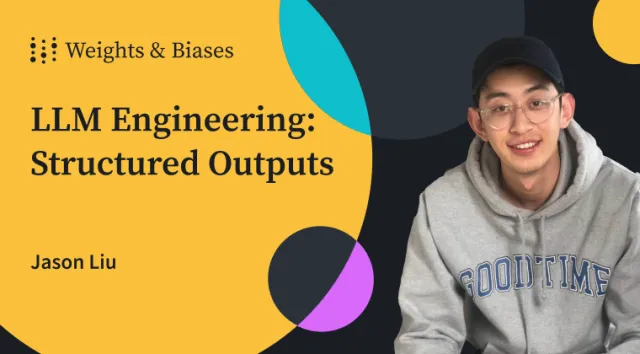
For beginners, the top-rated Structured Outputs course is "LLM engineering: Structured outputs" by Weights & Biases. It covers fundamental techniques, practical applications, and hands-on projects to build real-world skills. The course is currently available on the Weights & Biases platform.
Is Structured Outputs hard to learn?▾
Structured Outputs can be moderately challenging to learn, as it requires a solid grasp of machine learning, natural language processing, and software engineering concepts. However, with the right resources and hands-on practice, it is very learnable for motivated students, especially those with some prior experience in these domains.
How long to learn Structured Outputs?▾
The time it takes to learn Structured Outputs can vary depending on your prior knowledge and learning pace, but most beginners can become proficient in 2-3 months of dedicated study and practice. This includes mastering the core techniques, understanding key use cases, and building practical projects.
Structured Outputs salary 2026?▾
By 2026, the average salary for roles requiring Structured Outputs skills is projected to be $120,000-$150,000 per year in the United States. This represents a 15-30% increase over current levels, as demand for advanced content generation capabilities continues to rise across industries.
What are the top tools for Structured Outputs?▾
Some of the top tools and frameworks for Structured Outputs include Hugging Face Transformers, AlphaFold, the Weights & Biases platform, and specialized libraries like OpenNMT and fairseq. These provide powerful building blocks for developing natural language generation models with structured output capabilities.