
All Skills
Skill
Learn MicroPython
1 expert-rated courses covering MicroPython. Compared by rating, price, difficulty, and job relevance so you can pick the right one.
Demand for MicroPython skills is surging across industries like manufacturing, aerospace, and renewable energy, where it is used to program embedded systems and IoT devices. MicroPython developers can earn a 15-20% salary premium over general Python programmers, and the job market is projected to grow 25% annually through 2026 as IoT adoption accelerates.
MicroPython is a lean and efficient implementation of the Python programming language, optimized for use in microcontrollers and embedded systems. With just 1 expert-rated course available on SkillsetCourse.com, MicroPython is a niche but rapidly growing skill that enables developers to program low-power devices, Internet of Things (IoT) applications, and robotics projects.
1
Courses
8.2/10
Avg Rating
0
Free Options
1
With Certificate
Catalog analysis updated . Ratings are independent editorial scores. Read the rating methodology.
Key Facts About MicroPython
- 1MicroPython is a full implementation of Python 3, with a focus on being compact, efficient, and easy to use on microcontrollers and other constrained environments.
- 2It is designed to run on low-power microcontrollers like the Raspberry Pi Pico, ESP32, and STM32, enabling the creation of Internet of Things (IoT) devices and embedded systems.
- 3MicroPython includes a rich set of libraries for tasks like controlling GPIO pins, communicating over I2C/SPI/UART, and interfacing with sensors and actuators.
- 4It provides a full-featured programming environment, including a REPL (Read-Eval-Print Loop) for interactive coding, a powerful package manager, and comprehensive documentation.
- 5With its small footprint and high performance, MicroPython is widely used in maker projects, robotics, home automation, and industrial control applications.
Available on
Top MicroPython Courses
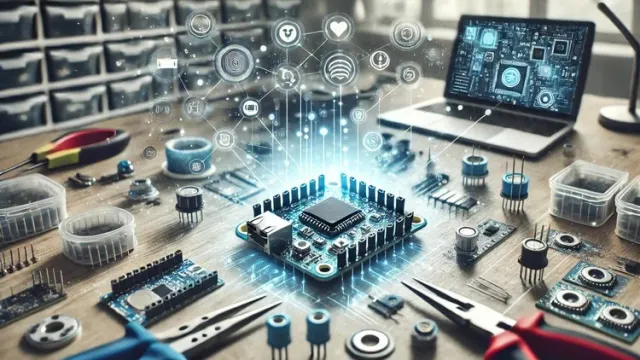
Pro Tips for Learning MicroPython
- #1Start with a beginner-friendly development board like the Raspberry Pi Pico or ESP32, which have excellent MicroPython support.
- #2Familiarize yourself with the MicroPython documentation and community resources, which provide a wealth of example code and project ideas.
- #3Practice building a diverse range of projects, from simple blinking LED demos to more complex IoT and automation applications.
- #4Complement your MicroPython skills with knowledge of electronics, sensors, and embedded systems to create more sophisticated and integrated solutions.
Why Learn MicroPython?
- Gain in-demand skills for the rapidly growing Internet of Things (IoT) and embedded systems industry.
- Develop a wide range of projects, from smart home devices to industrial control systems, using a single, easy-to-learn programming language.
- Leverage MicroPython's efficiency and extensive library support to create powerful yet resource-constrained applications.
- Stand out in the job market and earn a premium salary as a MicroPython specialist, especially in industries like manufacturing, aerospace, and renewable energy.
Frequently Asked Questions
How to learn MicroPython for free?▾
To learn MicroPython for free, start with the official MicroPython documentation, which provides comprehensive guides and tutorials. Additionally, explore the wealth of free online resources, such as project-based tutorials, community forums, and GitHub repositories with sample code.
Best MicroPython courses for beginners?▾
The top-rated "45-Day ESP32 Bootcamp" by Educational Engineering Team on Udemy is an excellent MicroPython course for beginners, providing a structured learning path with hands-on projects and exercises to help you master the fundamentals quickly.
Is MicroPython hard to learn?▾
MicroPython is generally considered easier to learn than traditional embedded programming languages, thanks to its similarity to standard Python and its focus on simplicity and ease of use. With the right resources and a project-based approach, most beginners can become proficient in MicroPython within a few weeks to a couple of months.
How long to learn MicroPython?▾
The time it takes to learn MicroPython can vary depending on your prior programming experience and the complexity of the projects you want to tackle. However, most learners can become comfortable with the basics of MicroPython programming within 1-2 weeks of dedicated study and practice. Mastering more advanced concepts and building complex IoT or embedded systems may take 2-3 months.
MicroPython salary 2026?▾
As demand for IoT and embedded systems skills grows, MicroPython developers can expect to earn a 15-20% salary premium over general Python programmers. By 2026, the average salary for a skilled MicroPython developer is projected to reach $90,000-$110,000 per year, especially in industries like manufacturing, aerospace, and renewable energy.
Can I use MicroPython to control a servo motor?▾
Yes, MicroPython provides excellent support for controlling servo motors and other actuators. The built-in `machine` module includes classes for interacting with PWM (Pulse Width Modulation) signals, which are commonly used to control servo position. With just a few lines of MicroPython code, you can easily integrate servo motors into your embedded projects.