
Learn AI Engineering
8 expert-rated courses covering AI Engineering. Compared by rating, price, difficulty, and job relevance so you can pick the right one.
The SkillsetCourse catalog highlights the depth of AI Engineering training with 8 specialized courses available on platforms like Coursera and Udemy. While there are no free options, 6 courses provide certificates upon completion, enhancing career prospects. Related skills such as TensorFlow and PyTorch are essential for mastering AI Engineering.
Catalog analysis updated . Ratings are independent editorial scores. Read the rating methodology.
Key Facts About AI Engineering
- 1AI Engineering combines software engineering and machine learning to create intelligent systems.
- 2The SkillsetCourse catalog features 8 AI Engineering courses from various platforms.
- 3Courses like the AI Engineer for Data Scientists Associate Certification focus on practical applications.
- 46 out of 8 courses offer certificates, validating skills for employers.
- 5AI Engineering is crucial for developing AI applications across industries.
Top AI Engineering Courses
IBM AI Engineering Professional Certificate
Professional certificate covering ML algorithms, deep learning frameworks, and deployment workflows including Spark, Keras, PyTorch, and TensorFlow.
The AI Engineer Course 2026: Complete AI Engineer Bootcamp
Comprehensive bootcamp covering AI fundamentals, Python, NLP, LLMs, LangChain, vector databases, and speech recognition.
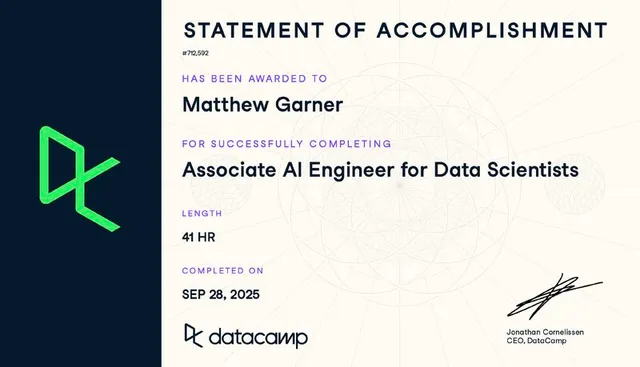
AI Engineer for Data Scientists Associate Certification
Associate certification validating practical AI engineering capabilities for data scientists, including governance and production development.
The AI Engineering Bootcamp
Intensive bootcamp for engineers building production AI systems with agentic RAG, evals, deployments, and certification challenge milestones.
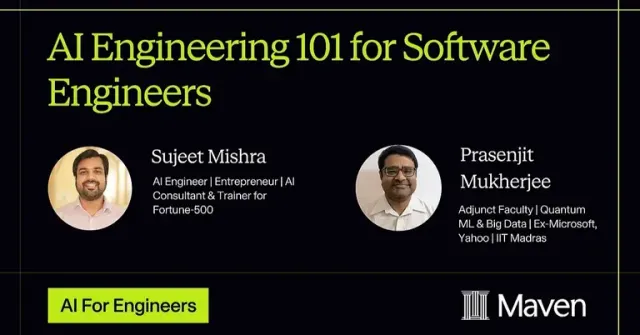
Level Up From Software Engineer to AI Engineer
Hands-on cohort for software engineers transitioning into AI through OpenAI APIs, RAG, multimodal workflows, and first-agent implementation.
Complete AI Engineer Bootcamp (3 Days)
Hands-on live bootcamp focused on building and deploying a production-ready AI application, covering LLM APIs, RAG, agents, and FastAPI deployment.
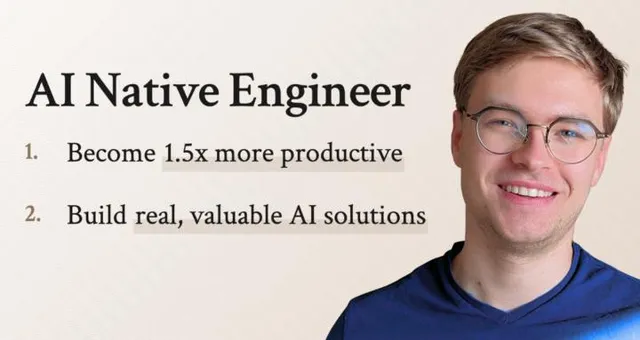
AI Native Engineers
Membership program promising a 90-day AI engineer path with 25+ hours of masterclasses, portfolio projects, and support for local and cloud AI project delivery.
AI Engineer Professional
Advanced specialization covering MLOps, CNNs, RNNs, generative AI agents, LangGraph, Keras, and production-ready AI systems.
Pro Tips for Learning AI Engineering
- #1Start with foundational courses like the AI Engineer Course 2026 to build essential skills.
- #2Practice coding in Python, as it is a key language in AI Engineering.
- #3Engage with community forums on platforms like Coursera for collaborative learning.
- #4Supplement your learning with projects that apply AI concepts in real-world scenarios.
Why Learn AI Engineering?
- Learning AI Engineering opens opportunities in high-demand tech roles, enhancing career advancement.
- AI Engineering skills are essential for creating innovative solutions in various sectors.
- Professionals with AI Engineering expertise can lead projects that integrate AI technologies.
- The field of AI Engineering is rapidly evolving, making continuous learning vital for career growth.