
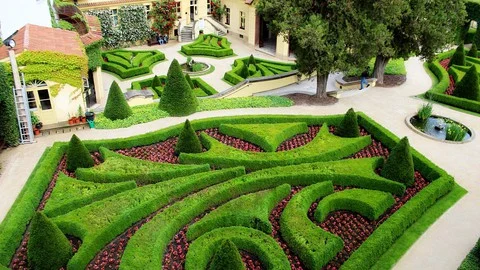
Landscape Design and Garden Planning
Udemy · Garden Design Academy · Updated
AI Tutor Rating
8.1/10
Duration
14 hours video
Classes
90
Gain the practical knowledge to manage natural resources responsibly in this field-ready course. Landscape design covering plant selection, hardscape design, irrigation planning, sustainable landscaping, seasonal planting, and garden project management. Features real-world case studies from working farms, conservation projects, and environmental agencies across multiple ecosystems.
Landscape Design and Garden Planning on Udemy, delivered by Garden Design Academy, is a 14-hour, 90-lecture course that takes learners from foundational design principles through advanced sustainable growing systems. The curriculum spans plant selection, hardscape design, irrigation planning, soil science, crop rotation, and controlled-environment agriculture including hydroponics. Real-world case studies drawn from working farms, conservation projects, and environmental agencies across multiple ecosystems give the material practical grounding. No prior farming or environmental experience is required, making it accessible to beginners with an interest in outdoor and sustainable practices.
What you'll learn in Landscape Design and Garden Planning
Our Review of Landscape Design and Garden Planning
Landscape Design and Garden Planning is structured in eight curriculum chapters that move logically from conceptual fundamentals to hands-on application and a final assessment. The progression, starting with design theory and garden planning integration, then advancing through irrigation systems, horticulture architecture, and planting best practices, suggests a deliberate scaffolding approach rather than a loose collection of lectures. At 90 lectures across 14 hours, the average segment runs roughly nine minutes, a format that suits self-paced study and makes it easy to revisit specific topics like soil nutrient management or pruning techniques without rewatching lengthy blocks of content.
The breadth of outcomes is genuinely ambitious for a single course. Learners are expected to emerge able to design functional landscape plans, analyze soil composition, plan irrigation systems, manage crop rotations, and operate greenhouse and hydroponic setups. That range spans residential garden design on one end and small-scale commercial growing on the other. Whether any individual learner reaches competency across all of those domains depends heavily on how much they practice outside the platform, but the curriculum at least maps a coherent path through each skill area. The inclusion of real-world case studies from conservation projects and environmental agencies adds applied context that purely theoretical courses often lack.
At $14.99 and with a Udemy certificate of completion included, the value proposition is straightforward. The certificate carries no formal accreditation, as is standard on Udemy, so it functions best as a portfolio signal or a structured learning record rather than a professional credential. For hobbyists, career-changers exploring horticulture, or small-farm operators wanting to formalize their knowledge, the low price point removes almost all financial risk. The combination of certificate, case studies, and a final project and assessment module gives the course more evaluative structure than many comparably priced Udemy offerings.
Pros and cons of Landscape Design and Garden Planning
Pros
- Broad, well-sequenced curriculum covering landscape design, irrigation, soil science, crop rotation, and hydroponics in a single course
- 90 lectures across 14 hours provide granular, replayable segments suited to self-paced and reference-style learning
- Real-world case studies from working farms, conservation projects, and environmental agencies add applied, ecosystem-specific context
- Final Project and Assessment module gives learners a concrete deliverable to demonstrate skills rather than passive video consumption alone
- At $14.99 with a certificate of completion included, the course offers exceptionally low financial risk for the scope of content delivered
Things to consider
- The Udemy certificate carries no formal accreditation, limiting its weight for professional licensing or academic credit purposes
- The scope spans residential garden design through commercial hydroponics, which may feel too broad for learners seeking deep specialization in one area
- Video-only format means hands-on skills like pruning, soil testing, and irrigation installation require independent practice outside the course to reach real competency
Who should take Landscape Design and Garden Planning?
Landscape Design and Garden Planning is best suited for beginners and intermediate learners who want a single, affordable course covering the full arc from garden aesthetics to sustainable food production. It fits homeowners planning a landscape renovation, aspiring horticulturists building foundational knowledge, and small-farm operators who want structured exposure to irrigation planning, soil science, and controlled-environment growing without committing to a formal degree program.
Course curriculum for Landscape Design and Garden Planning
Landscape Design and Garden Planning at a glance
| Provider | Udemy |
|---|---|
| Instructor | Garden Design Academy |
| Level | Intermediate |
| Time to complete | 14 hours video |
| Pricing | $14.99 |
| Certificate | Certificate |
| Prerequisites | No prior farming or environmental experience required. An interest in the outdoors and sustainable practices is helpful. |
Fit
Best for
Not ideal for
The bottom line on Landscape Design and Garden Planning
Landscape Design and Garden Planning on Udemy delivers a genuinely wide-ranging curriculum at a price that makes hesitation difficult to justify. The course will not replace hands-on field experience or accredited professional training, but as a structured, case-study-supported foundation covering everything from plant selection to hydroponics, it offers strong value for beginners and self-directed learners ready to put the concepts into practice.
Landscape Design and Garden Planning: frequently asked questions
What does the Landscape Design and Garden Planning course on Udemy actually cover?
The course covers landscape design fundamentals, plant selection for climate and site, hardscape design, irrigation planning, soil science and nutrient management, crop rotation, pruning, sustainable farming practices, and greenhouse and hydroponic systems. It draws on real-world case studies from farms, conservation projects, and environmental agencies across multiple ecosystems, spanning 90 lectures and 14 hours of video.
Do I need any prior experience to take Landscape Design and Garden Planning?
No prior farming or environmental experience is required. The course is designed for beginners, and the only suggested background is a general interest in the outdoors and sustainable practices. The curriculum starts with fundamentals before advancing to more technical topics like irrigation system planning and controlled-environment growing, making it accessible to complete newcomers.
Is the Udemy certificate for Landscape Design and Garden Planning worth getting?
The certificate of completion is included in the $14.99 price and is useful as a portfolio signal or structured learning record. It is not formally accredited, which is standard for Udemy courses, so it will not satisfy professional licensing requirements. For hobbyists, career-changers, or small-farm operators, it provides a credible record of having completed a structured, assessment-backed curriculum.
How does Landscape Design and Garden Planning compare to other beginner horticulture courses?
Most entry-level horticulture courses focus narrowly on either garden aesthetics or food production. Landscape Design and Garden Planning covers both within a single 14-hour curriculum, adding soil science, hydroponics, and crop rotation that many comparable courses omit. The real-world case studies and a final project module also give it more applied structure than typical video-only alternatives at a similar price point.
How should I approach Landscape Design and Garden Planning to get the most out of it?
Work through the chapters in sequence since the curriculum is scaffolded from fundamentals to advanced application. Take notes during the irrigation and soil science sections, which are technical enough to benefit from review. Use the final project module to produce an actual landscape or garden plan for a real space you have access to, and supplement the video content with hands-on practice for skills like pruning and soil testing.