
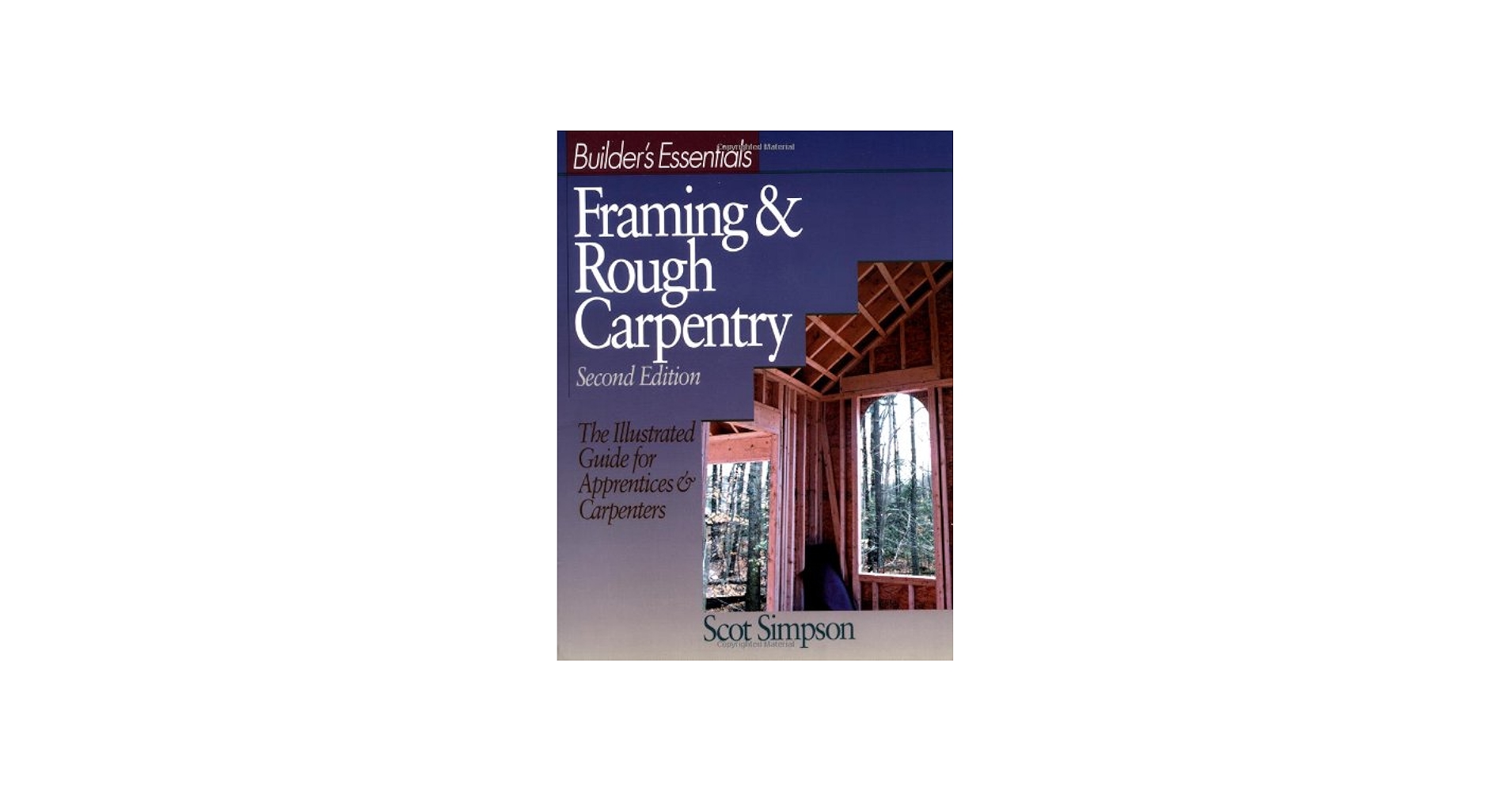
Carpentry Essentials: Framing to Finish
Udemy · Larry Haun Institute · Updated
AI Tutor Rating
8.5/10
Duration
20 hours video
Classes
130
Build job-ready skills that employers actually hire for in this industry-standard course. Carpentry course covering framing, roofing, trim work, cabinet installation, stair building, and finish carpentry for residential construction. Combines technical theory with hands-on exercises that mirror actual work conditions. Includes detailed demonstrations, safety protocols, and real-world project walkthroughs that mirror actual job site conditions.
Carpentry Essentials: Framing to Finish is a Udemy course from the Larry Haun Institute that walks learners through the full arc of residential carpentry, from structural framing and roofing to trim work, cabinet installation, stair building, and finish carpentry. Spanning 20 hours of video across 130 lectures, it targets complete beginners with no prior trade experience while covering blueprint reading, material estimating, building code compliance, weatherproofing, and safe tool operation. The course is designed to mirror real job-site conditions, making it a practical entry point for anyone pursuing work in residential construction.
What you'll learn in Carpentry Essentials: Framing to Finish
Our Review of Carpentry Essentials: Framing to Finish
Carpentry Essentials: Framing to Finish is structured to take a learner from zero trade knowledge to a working understanding of nearly every phase of residential construction. The curriculum chapters move logically from foundational concepts through blueprint reading, framing integration, applied finish carpentry, trim work, and advanced construction concepts before closing with a tools-and-ecosystem module and a course review. That sequencing matters: a learner who completes the full 130-lecture arc should be able to frame walls, floors, and roof structures to code, install cabinetry and molding to professional standards, and estimate material costs for a job site. Those are outcomes that translate directly to entry-level hiring criteria in the construction trades.
The teaching format, detailed demonstrations combined with real-world project walkthroughs, is well-suited to a tactile subject like carpentry. Video-based instruction cannot replace hands-on practice, but 20 hours of demonstration-heavy content gives a learner a strong mental model of sequencing, tool handling, and safety protocols before ever picking up a framing nailer. The inclusion of safety protocols and building-code compliance as explicit curriculum elements adds professional credibility that many hobbyist woodworking courses skip entirely. Blueprint reading and cost estimation further separate this course from craft-focused alternatives, signaling that the Larry Haun Institute is aiming at employability rather than weekend projects.
At $14.99, Carpentry Essentials: Framing to Finish is priced well below a single community-college continuing-education session, and the included Udemy certificate provides a shareable credential for a resume or LinkedIn profile. The certificate carries no licensing weight, but as a signal of structured self-study it is a reasonable addition at this price point. Learners should understand that the course covers a wide range of topics across 20 hours, meaning some advanced subtopics may be introduced rather than exhaustively drilled. The breadth is a feature for someone building a broad foundation, but a journeyman carpenter looking to deepen one specific skill set may find the survey format less useful.
Pros and cons of Carpentry Essentials: Framing to Finish
Pros
- Covers the full residential carpentry workflow, from structural framing and roofing to finish carpentry and cabinet installation, in a single course.
- Blueprint reading and material estimating are included as explicit outcomes, adding job-site relevance beyond basic woodworking skills.
- Safety protocols and building-code compliance are woven into the curriculum, reflecting real employer expectations in the construction trades.
- At $14.99, the course delivers 20 hours of demonstration-heavy video and a completion certificate at a price point far below comparable in-person training.
- No prior trade experience is required, making it accessible to career changers, homeowners, and pre-apprenticeship candidates alike.
Things to consider
- Video instruction cannot substitute for supervised hands-on practice; learners will need access to tools and materials to convert demonstrations into real competency.
- The broad survey format, covering framing, roofing, trim, cabinetry, stairs, and estimating across 20 hours, means some topics are introduced rather than mastered in depth.
- The Udemy completion certificate carries no licensing or accreditation value and will not satisfy formal apprenticeship or contractor-licensing requirements.
Who should take Carpentry Essentials: Framing to Finish?
Carpentry Essentials: Framing to Finish is best suited to career changers exploring the construction trades, pre-apprenticeship candidates who want a structured knowledge base before entering a union or employer program, and motivated homeowners tackling significant renovation projects. It is particularly well-matched to learners who need both technical framing skills and practical job-site competencies like blueprint reading and cost estimation in a single, affordable package.
Course curriculum for Carpentry Essentials: Framing to Finish
Carpentry Essentials: Framing to Finish at a glance
| Provider | Udemy |
|---|---|
| Instructor | Larry Haun Institute |
| Level | Intermediate |
| Time to complete | 20 hours video |
| Pricing | $14.99 |
| Certificate | Certificate |
| Prerequisites | No prior trade experience required. Physical ability to perform hands-on work and basic math skills are helpful. |
Fit
Best for
Not ideal for
The bottom line on Carpentry Essentials: Framing to Finish
Carpentry Essentials: Framing to Finish delivers an unusually broad residential construction curriculum at a price that removes almost all financial risk. The Larry Haun Institute's emphasis on code compliance, safety, and estimating gives it real vocational credibility. Learners who supplement the video content with hands-on practice will leave with a genuinely job-relevant skill set; those expecting a shortcut to licensure or deep specialization will need additional resources.
Carpentry Essentials: Framing to Finish: frequently asked questions
What does Carpentry Essentials: Framing to Finish actually teach you to do?
Carpentry Essentials: Framing to Finish teaches learners to frame walls, floors, and roof structures to code, install trim, molding, cabinetry, and finish carpentry elements, read construction blueprints, estimate material costs, implement weatherproofing and insulation systems, and operate power and hand tools safely. The curriculum covers the full residential construction workflow from structural framing through final finish work.
Do you need any prior carpentry or construction experience to take this course?
No prior trade experience is required for Carpentry Essentials: Framing to Finish. The course is designed for beginners. Basic math skills and the physical ability to perform hands-on work are listed as helpful but not mandatory prerequisites, making it accessible to career changers and complete newcomers to the construction trades.
Is the Udemy certificate from Carpentry Essentials: Framing to Finish worth anything professionally?
The completion certificate included with Carpentry Essentials: Framing to Finish is a Udemy-issued credential suitable for a resume or LinkedIn profile as evidence of structured self-study. It carries no licensing, accreditation, or apprenticeship-program weight. For formal contractor licensing or union apprenticeship entry, additional credentialing beyond this certificate will be required.
How does Carpentry Essentials: Framing to Finish compare to a community college carpentry course?
Carpentry Essentials: Framing to Finish covers a comparable range of residential construction topics, including framing, finish work, blueprint reading, and estimating, at $14.99 versus the significantly higher cost of a community college continuing-education course. The trade-off is that community college programs typically include supervised hands-on lab time and may carry formal credit, which this Udemy course does not provide.
What is the best way to get the most out of Carpentry Essentials: Framing to Finish?
To maximize value from Carpentry Essentials: Framing to Finish, learners should work through the 130 lectures in sequence, since the curriculum builds from foundational framing concepts to advanced finish carpentry. Pairing each module with hands-on practice using actual tools and materials will convert video demonstrations into real skill. Focusing on the blueprint reading and estimating chapters adds immediate job-site applicability.