
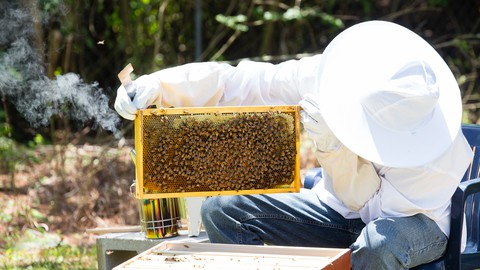
Beekeeping Masterclass: From Hive to Harvest
Udemy · Beekeeper's Guild · Updated
AI Tutor Rating
8.1/10
Duration
12 hours video
Classes
82
Gain the practical knowledge to manage natural resources responsibly in this field-ready course. Beekeeping course covering hive management, queen rearing, disease prevention, honey harvesting, beeswax processing, and starting a beekeeping business. Features real-world case studies from working farms, conservation projects, and environmental agencies across multiple ecosystems.
Beekeeping Masterclass: From Hive to Harvest on Udemy is a 12-hour, 82-lecture course produced by the Beekeeper's Guild that takes complete beginners through every stage of practical apiculture. The curriculum spans hive setup, queen rearing, disease and parasite management, honey harvesting, and beeswax processing, while also touching on sustainable farming, irrigation, and landscape design principles. Real-world case studies drawn from working farms, conservation projects, and environmental agencies across multiple ecosystems give the material a field-ready grounding that goes beyond classroom theory.
What you'll learn in Beekeeping Masterclass: From Hive to Harvest
Our Review of Beekeeping Masterclass: From Hive to Harvest
Beekeeping Masterclass: From Hive to Harvest is structured in a logical progression that mirrors the actual lifecycle of a beekeeper's first seasons. Early chapters handle orientation and hive setup, mid-course sections tackle the technically demanding work of queen rearing and disease identification, and later chapters move into the rewarding outputs: honey harvesting and beeswax processing. The inclusion of a dedicated Portfolio Project and Certification Prep chapter at the end is a meaningful structural choice, signaling that the course is designed to produce demonstrable competence rather than passive familiarity. With 82 lectures spread across 12 hours, the average lecture runs under 10 minutes, which suits learners who absorb material in short, focused sessions.
The depth-to-difficulty balance is well-calibrated for its stated audience. No prior farming or environmental experience is required, yet the curriculum does not stay shallow. Chapters like 'Deep Dive: Apiculture' and 'Queen Rearing Best Practices' suggest the Beekeeper's Guild is willing to push learners into genuinely technical territory. The real-world case studies from multiple ecosystems are a particular asset, because beekeeping conditions vary significantly by climate and flora, and exposure to diverse scenarios prepares students for the unpredictability of live colonies. The learning outcomes also extend into adjacent skills, including irrigation system installation and ecology-based landscape design, which broadens the course's appeal to anyone interested in holistic land stewardship.
At $14.99 with a certificate of completion included, Beekeeping Masterclass: From Hive to Harvest offers strong value by any measure. The certificate will not substitute for hands-on mentorship or professional apiarist credentials, but it provides a useful credential for hobbyists, small-farm operators, or anyone building a portfolio in sustainable agriculture. The breadth of topics covered, from colony health to business-starting guidance, means the course functions as a genuine foundation rather than a narrow introduction.
Pros and cons of Beekeeping Masterclass: From Hive to Harvest
Pros
- Comprehensive 12-hour curriculum covering the full apiculture workflow from hive installation through honey harvesting and beeswax processing
- No prior experience required, making it accessible to complete beginners while still covering technically demanding topics like queen rearing and disease treatment
- Real-world case studies from working farms, conservation projects, and environmental agencies across multiple ecosystems add practical, transferable context
- Includes a Portfolio Project and Certification Prep chapter, giving learners a structured path to demonstrate competence
- Priced at $14.99 with a certificate of completion included, delivering high value relative to the breadth of content
Things to consider
- Video-only format across 82 lectures means learners get no live feedback, hands-on mentorship, or community critique, which is a notable gap for a skill that involves managing live insects
- The curriculum blends beekeeping with irrigation, landscape design, and sustainable farming, which adds breadth but may dilute focus for learners who want pure apiculture depth
- The Udemy certificate of completion carries limited professional weight and will not satisfy licensing or regulatory requirements in jurisdictions that govern commercial beekeeping
Who should take Beekeeping Masterclass: From Hive to Harvest?
Beekeeping Masterclass: From Hive to Harvest is best suited for hobbyists, homesteaders, and small-farm operators who want a structured, affordable entry point into apiculture. It also fits sustainability-minded learners who want to understand how beekeeping integrates with broader land management practices. Anyone planning to start a small beekeeping business will find the business-starting content and portfolio project particularly relevant.
Course curriculum for Beekeeping Masterclass: From Hive to Harvest
Beekeeping Masterclass: From Hive to Harvest at a glance
| Provider | Udemy |
|---|---|
| Instructor | Beekeeper's Guild |
| Level | Intermediate |
| Time to complete | 12 hours video |
| Pricing | $14.99 |
| Certificate | Certificate |
| Prerequisites | No prior farming or environmental experience required. An interest in the outdoors and sustainable practices is helpful. |
Fit
Best for
Not ideal for
The bottom line on Beekeeping Masterclass: From Hive to Harvest
Beekeeping Masterclass: From Hive to Harvest on Udemy is a well-structured, beginner-friendly course that covers apiculture comprehensively without demanding prior experience. The real-world case studies, business guidance, and portfolio project elevate it above a basic introduction. At $14.99 with a certificate included, it is a low-risk investment for aspiring beekeepers, provided they supplement the video content with hands-on practice in the field.
Beekeeping Masterclass: From Hive to Harvest: frequently asked questions
What does Beekeeping Masterclass: From Hive to Harvest actually cover?
The course covers hive setup and year-round colony management, queen rearing, identification and treatment of bee diseases and parasites, honey harvesting, beeswax processing, and starting a beekeeping business. It also includes modules on sustainable farming, irrigation, and landscape design, supported by real-world case studies from farms and conservation projects across multiple ecosystems.
Do I need any prior experience to take Beekeeping Masterclass: From Hive to Harvest?
No prior farming or environmental experience is required. The course is designed for complete beginners, and the Beekeeper's Guild states that an interest in the outdoors and sustainable practices is helpful but not mandatory. The curriculum builds from foundational concepts before moving into technically demanding topics like queen rearing and disease management.
Is the certificate from Beekeeping Masterclass: From Hive to Harvest worth anything?
The Udemy certificate of completion is useful for demonstrating initiative to employers, clients, or collaborators in sustainable agriculture, and it complements the course's Portfolio Project chapter. However, it is not a professional apiarist credential and will not satisfy commercial beekeeping licensing requirements in jurisdictions that regulate the practice.
How does Beekeeping Masterclass: From Hive to Harvest compare to learning beekeeping through a local beekeeping association?
A local beekeeping association typically offers hands-on hive inspections, live mentorship, and community support that no video course can replicate. Beekeeping Masterclass: From Hive to Harvest offers structured, on-demand content at a much lower cost, covering theory, case studies, and business guidance. The two approaches are complementary, with the course providing a strong knowledge foundation before hands-on practice.
How should I approach Beekeeping Masterclass: From Hive to Harvest to get the most out of it?
Work through the chapters in sequence, since the curriculum is structured to build progressively from setup to advanced topics. Engage actively with the Portfolio Project and Certification Prep chapter rather than skipping it, as it consolidates learning. Pair the video content with hands-on practice, ideally by joining a local beekeeping club or setting up a starter hive alongside the course.