
Viticulture and Wine Production
Coursera · University of California, Davis · Updated
AI Tutor Rating
8.1/10
Duration
6 weeks, 4 hours/week
Classes
30
Gain the practical knowledge to manage natural resources responsibly in this field-ready course. Grape growing and winemaking covering vineyard management, grape varieties, fermentation science, cellar operations, wine quality assessment, and vineyard business planning. Features real-world case studies from working farms, conservation projects, and environmental agencies across multiple ecosystems.
Viticulture and Wine Production on Coursera, developed by the University of California, Davis, is a six-week course covering the full arc of grape growing and winemaking. Learners move through vineyard management, grape varieties, fermentation science, cellar operations, sensory wine quality assessment, and vineyard business planning. Delivered in roughly four hours per week across 30 lectures, it draws on real-world case studies from working farms and conservation projects. No prior farming or environmental background is required, making it accessible to career changers, enthusiasts, and early-stage agricultural professionals alike.
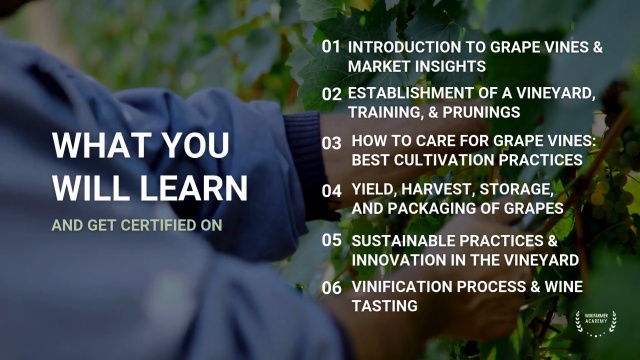
What you'll learn in Viticulture and Wine Production
Our Review of Viticulture and Wine Production
Viticulture and Wine Production on Coursera is structured with a clear pedagogical arc. The curriculum opens with foundational viticulture concepts, advances through hands-on winemaking processes from fermentation to bottling, and closes with a dedicated career-pathways module. That final chapter is a meaningful addition often missing from hobbyist-oriented wine courses; it signals that UC Davis designed this program with professional applicability in mind, not just personal enrichment. The 30-lecture format spread over six weeks keeps weekly workload manageable at around four hours, which suits working adults who cannot commit to intensive study blocks.
The depth of the learning outcomes is genuinely impressive for a beginner-accessible course. Learners are expected to install and maintain irrigation systems, apply pruning and propagation techniques, and implement sustainable farming practices, outcomes that go well beyond wine appreciation into operational competence. The inclusion of landscape design, plant identification, and even hydroponics among the listed skills suggests the course positions viticulture within a broader sustainable-agriculture context, which adds transferable value for learners interested in adjacent fields. Real-world case studies from multiple ecosystems strengthen the practical grounding and help learners connect classroom concepts to actual vineyard conditions.
At $49 per month on Coursera, the cost is competitive, particularly given that a shareable certificate from UC Davis is included upon completion. For a learner who finishes within one billing cycle, the total investment is modest relative to the credential source. The certificate carries the UC Davis name, one of the most respected viticulture programs in the world, which adds resume credibility that a generic platform certificate would not. The main caveat is that the course is self-paced online learning; learners who need hands-on sensory training or physical vineyard practice will need to supplement this course with in-person experience to fully develop skills like wine quality assessment.
Pros and cons of Viticulture and Wine Production
Pros
- Backed by UC Davis, a globally recognized authority in viticulture and enology, lending the certificate genuine professional credibility.
- Broad, operational learning outcomes, including irrigation installation, pruning, and sustainable farming, go well beyond wine appreciation into field-ready skills.
- Accessible to complete beginners with no prior farming or environmental experience required, lowering the barrier to entry significantly.
- Real-world case studies from working farms and multiple ecosystems connect theory to practical vineyard and cellar conditions.
- The dedicated career-pathways module at the end of the curriculum helps learners translate skills into professional next steps, a feature many comparable courses omit.
Things to consider
- Online-only delivery means sensory evaluation skills, such as wine quality assessment by taste and aroma, cannot be fully developed without supplementary in-person practice.
- The $49 per month subscription model means costs can accumulate for learners who need more than one month to complete the six-week program.
- The breadth of topics covered, from hydroponics to landscape design, may feel scattered for learners seeking deep specialization in a single area like fermentation science or cellar operations.
Who should take Viticulture and Wine Production?
Viticulture and Wine Production on Coursera is best suited for career changers exploring the wine and agriculture industries, hospitality professionals seeking credentialed wine knowledge, and early-stage farmers wanting a structured introduction to vineyard management. It also fits motivated enthusiasts who want more than tasting notes and are willing to engage with irrigation, propagation, and sustainability concepts at a practical, operational level.
Course curriculum for Viticulture and Wine Production
Viticulture and Wine Production at a glance
| Provider | Coursera |
|---|---|
| Instructor | University of California, Davis |
| Level | Intermediate |
| Time to complete | 6 weeks, 4 hours/week |
| Pricing | $49/month |
| Certificate | Certificate |
| Prerequisites | No prior farming or environmental experience required. An interest in the outdoors and sustainable practices is helpful. |
Fit
Best for
Not ideal for
This specific course is no longer offered. The button above searches Coursera for similar options.
The bottom line on Viticulture and Wine Production
Viticulture and Wine Production on Coursera delivers a well-structured, beginner-friendly program with genuine operational depth, backed by the UC Davis name. The certificate adds real professional value, and the curriculum covers enough ground to serve both career-oriented learners and serious enthusiasts. Learners should plan to supplement online study with hands-on practice to fully realize the sensory and physical skills the course introduces.
Viticulture and Wine Production: frequently asked questions
What does the Viticulture and Wine Production course on Coursera actually cover?
The course covers vineyard management, grape varieties, fermentation science, cellar operations, wine quality assessment using sensory evaluation, irrigation system installation, pruning and propagation techniques, sustainable farming practices, and vineyard business planning. It also includes real-world case studies from working farms and conservation projects across multiple ecosystems, giving learners both theoretical grounding and practical context.
Do I need any farming or winemaking experience before enrolling in Viticulture and Wine Production?
No prior farming or environmental experience is required for Viticulture and Wine Production on Coursera. The course is designed to be accessible to complete beginners. An interest in the outdoors and sustainable practices is described as helpful but not mandatory, making it a realistic starting point for career changers or enthusiasts with no agricultural background.
Is the Viticulture and Wine Production certificate from Coursera worth it professionally?
The certificate is issued through the University of California, Davis, one of the most respected viticulture and enology programs in the world. That institutional association adds meaningful resume credibility compared to a generic platform certificate. At $49 per month, completing the six-week course within a single billing cycle keeps the total cost modest relative to the credential's source and professional signal.
How does Viticulture and Wine Production on Coursera compare to a typical wine appreciation course?
Unlike most wine appreciation courses that focus on tasting, pairing, and regional knowledge, Viticulture and Wine Production on Coursera emphasizes operational skills, including irrigation installation, pruning, propagation, fermentation management, and sustainable farming. It also includes a career-pathways module, positioning it as a professional development tool rather than a lifestyle or hobbyist offering.
How can I get the most out of the Viticulture and Wine Production course on Coursera?
To maximize value, complete the course within one billing cycle to keep costs to $49. Engage actively with the real-world case studies and apply the vineyard management and fermentation concepts to any local winery visits or farm visits you can arrange. Because sensory evaluation skills require physical practice, plan to supplement the online curriculum with in-person wine tasting or vineyard volunteer opportunities alongside your coursework.