
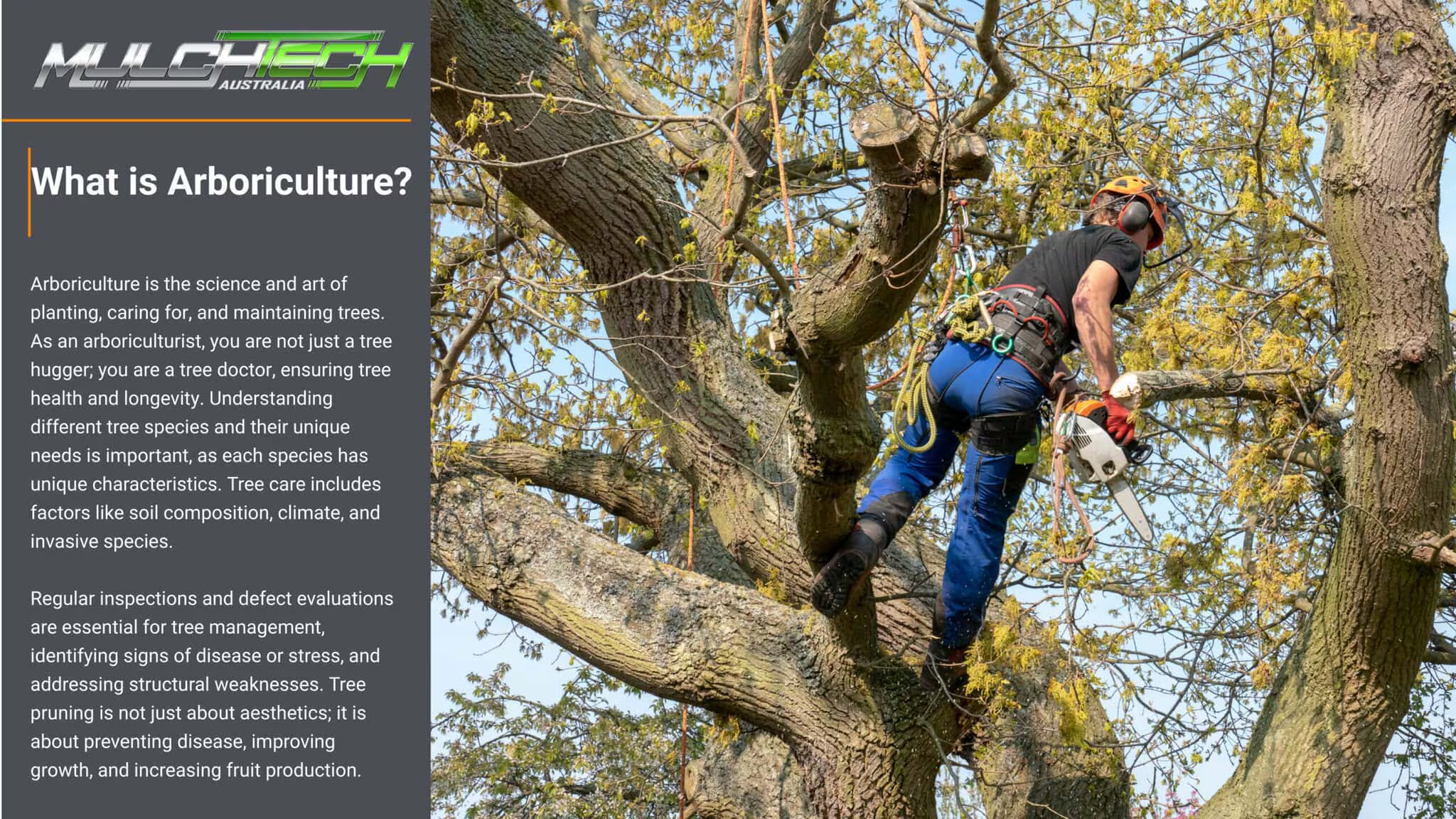
Arboriculture and Tree Care Professional
Coursera · University of Minnesota · Updated
AI Tutor Rating
8.1/10
Duration
6 weeks, 4 hours/week
Classes
32
Connect with the land and build sustainable skills that matter in this hands-on course. Tree care science covering tree identification, pruning techniques, tree risk assessment, pest and disease management, tree preservation, and ISA arborist certification prep. Created by professionals with hands-on experience in farming, conservation, and land management - instructors who work in the field, not just the classroom.
Arboriculture and Tree Care Professional is a Coursera course developed by the University of Minnesota that covers the full spectrum of professional tree care over six weeks at roughly four hours per week. The curriculum spans tree identification, pruning to ANSI A300 standards, tree risk assessment, pest and disease management, GIS mapping for environmental monitoring, and preparation for the ISA Certified Arborist examination. Designed for learners without prior farming or environmental experience, it serves career-changers, outdoor enthusiasts, and early-stage conservation professionals who want a structured, credential-backed entry into arboriculture.
What you'll learn in Arboriculture and Tree Care Professional
Our Review of Arboriculture and Tree Care Professional
Arboriculture and Tree Care Professional is structured across seven curriculum chapters that move logically from foundational concepts through hands-on ISA certification preparation and into advanced topics. With 32 lectures spread across six weeks, the pacing is measured rather than rushed, which suits learners who are balancing work or study alongside the course. The University of Minnesota's involvement signals academic rigor, and the emphasis on ANSI A300 pruning standards and ISA exam preparation means the content is anchored to recognized industry benchmarks rather than generic advice. That grounding in professional standards is one of the course's clearest differentiators on a platform as broad as Coursera.
The learning outcomes reveal an unusually wide scope. Alongside core arboriculture skills, the course incorporates GIS mapping, remote sensing, biodiversity surveys, habitat assessments, and even veterinary assistance tasks such as vaccinations and wound care. For a course positioned under wildlife conservation, this breadth makes sense, but prospective learners should understand that depth on any single topic will be proportional to the six-week timeframe. Someone seeking deep specialist training in, say, GIS forestry applications will likely need to supplement this course. For a generalist foundation that connects tree care to broader conservation practice, however, the scope is genuinely valuable.
At $49 per month on Coursera, a motivated learner who completes the course within one billing cycle keeps costs low, and the included certificate adds a shareable credential for LinkedIn profiles or job applications. The certificate's value is enhanced by the ISA certification prep component, because it positions the course not as a standalone endpoint but as a launchpad toward a widely respected professional credential in arboriculture. That combination of accessible pricing, university authorship, and industry-exam alignment makes the value proposition stronger than many comparable online offerings.
Pros and cons of Arboriculture and Tree Care Professional
Pros
- ISA Certified Arborist exam preparation is built directly into the curriculum, giving learners a clear professional credential pathway beyond the Coursera certificate itself.
- ANSI A300 pruning standards are explicitly taught, anchoring practical skills to the same benchmarks used by working arborists in the field.
- University of Minnesota authorship provides academic credibility and structured instructional design that self-published courses on the same platform often lack.
- No prior farming or environmental experience is required, making the course genuinely accessible to career-changers and motivated beginners.
- The inclusion of GIS mapping, biodiversity surveys, and conservation planning broadens the course's utility for learners interested in environmental monitoring roles beyond pure tree care.
Things to consider
- The six-week, four-hours-per-week format limits how deeply any single topic, such as GIS remote sensing or pest management, can be covered, so learners with specialist goals will need additional study.
- The curriculum's scope is unusually wide, mixing tree care with veterinary assistance and habitat assessment, which may feel unfocused to learners who enrolled specifically for arboriculture.
- Coursera's subscription pricing means learners who need more than one month to complete the course will pay additional fees, and there is no indication of a one-time purchase option in the page context.
Who should take Arboriculture and Tree Care Professional?
Arboriculture and Tree Care Professional is best suited to career-changers, outdoor professionals, and conservation-minded beginners who want a structured, university-backed introduction to tree care and want to begin preparing for the ISA Certified Arborist exam. It also fits land managers or environmental technicians who need working familiarity with tree risk assessment, pruning standards, and GIS-based monitoring tools without committing to a full degree program.
Course curriculum for Arboriculture and Tree Care Professional
Arboriculture and Tree Care Professional at a glance
| Provider | Coursera |
|---|---|
| Instructor | University of Minnesota |
| Level | Advanced |
| Time to complete | 6 weeks, 4 hours/week |
| Pricing | $49/month |
| Certificate | Certificate |
| Prerequisites | No prior farming or environmental experience required. An interest in the outdoors and sustainable practices is helpful. |
Fit
Best for
Not ideal for
This specific course is no longer offered. The button above searches Coursera for similar options.
The bottom line on Arboriculture and Tree Care Professional
Arboriculture and Tree Care Professional on Coursera delivers a well-structured, professionally anchored introduction to tree care that stands out for its ISA exam preparation and ANSI A300 standards coverage. The broad curriculum is both a strength and a limitation depending on your goals. For beginners and career-changers seeking a credible, affordable entry point into arboriculture and conservation work, this course offers genuine, practical value.
Arboriculture and Tree Care Professional: frequently asked questions
What does the Arboriculture and Tree Care Professional course on Coursera actually teach you?
The course teaches tree identification, professional pruning to ANSI A300 standards, tree health and risk assessment, pest and disease management, GIS mapping, biodiversity surveys, and ISA Certified Arborist exam preparation. It also touches on veterinary assistance tasks. The University of Minnesota developed the content across 32 lectures delivered over six weeks.
Do you need any prior experience to take the Arboriculture and Tree Care Professional course?
No prior farming or environmental experience is required. The course page notes that an interest in the outdoors and sustainable practices is helpful but not mandatory. This makes it accessible to complete beginners, career-changers, and anyone exploring arboriculture or conservation work for the first time.
Is the Arboriculture and Tree Care Professional certificate worth it for ISA exam preparation?
The course includes a dedicated ISA certification preparation chapter, which means the Coursera certificate is not the only credential outcome. Learners who complete the course gain structured preparation toward the ISA Certified Arborist exam, a widely recognized professional credential in arboriculture. That dual-credential pathway strengthens the overall value of the $49-per-month investment.
How does Arboriculture and Tree Care Professional compare to self-studying for the ISA Certified Arborist exam?
Self-study for the ISA exam typically requires sourcing and organizing materials independently. This course provides a structured University of Minnesota curriculum that integrates ISA prep alongside practical skills like ANSI A300 pruning and tree risk assessment. The guided format and Coursera certificate offer accountability and a shareable credential that unstructured self-study cannot replicate.
What is the best way to get the most out of the Arboriculture and Tree Care Professional course on Coursera?
Complete the course within a single month to minimize subscription costs. Focus especially on the ISA certification and ANSI A300 pruning chapters if professional arborist credentials are your goal. Supplement the GIS and biodiversity modules with additional resources if environmental monitoring is a priority, since the six-week format limits depth on those broader topics.