
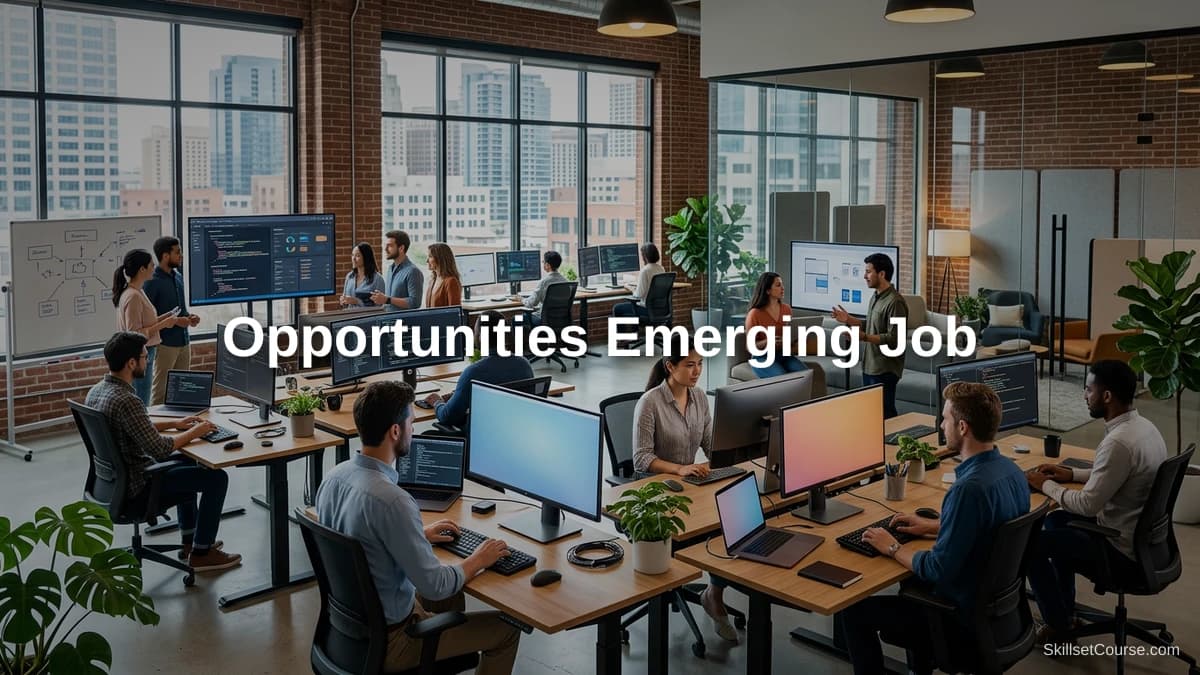
In a bold statement, the CEO of Wells Fargo recently contested the prevailing narrative surrounding AI's impact on jobs, asserting that AI is not a job killer but a transformative force for creating new opportunities. According to AI Magazine, he emphasized that the "AI-driven" economy will spur a significant demand for new skills and roles, contradicting alarmist predictions of widespread unemployment due to automation and artificial intelligence.
Key Takeaways
- The Wells Fargo CEO argues that AI will create more jobs than it displaces, focusing on new industry roles.
- He highlights the necessity for upskilling in areas like AI development, automation, and robotics to match emerging job requirements.
- The Bank foresees a shift in employment from repetitive tasks to roles requiring creativity and problem-solving skills.
- According to Bureau of Labor Statistics, sectors like AI and automation are expected to grow job opportunities by 15%-20% over the next decade.
- Skillsetcourse.com offers targeted AI Class courses and Robotics programs to help professionals transition effectively into these new roles.
Will AI Really Lead to Greater Job Creation?
The Economic Theory Behind AI and Job Creation
The argument that AI will create more jobs stems from the concept of economic disruption leading to transformation. As AI takes over repetitive and manual tasks, it allows the workforce to engage in higher-level activities that promote income generation. Historically, technological advancements have led to the creation of new industries and roles. The rise of personal computing, for instance, did not erode jobs but rather catalyzed burgeoning sectors like IT support, software development, and cybersecurity.
Wells Fargo's CEO reflects this sentiment, suggesting that emerging AI technologies will facilitate a similar revival, especially in sectors that leverage AI tools for increased efficiency. According to a McKinsey Global Institute report, by 2030, AI could boost global GDP by up to $13 trillion, underscoring the potential for economic growth and job creation.
Industries Likely to Benefit Most from AI
Certain industries are poised to gain more than others. Healthcare, for instance, stands to benefit tremendously from AI advancements in diagnostics and patient care management. According to Accenture, AI applications in healthcare could potentially save the U.S. healthcare economy up to $150 billion per annum by 2026, necessitating roles in AI health record management and remote monitoring systems.
Similarly, manufacturing sectors are transforming with the advent of robotics and automation. Already, companies that are integrating digital twins and robotics into their operations see a rise in roles such as robotics engineers and automation specialists. These changes highlight the necessity for a workforce adept in these advanced technologies.
The Importance of Education and Reskilling
As the labor market adapts, the need for advanced education and reskilling cannot be overstated. Skillsetcourse.com plays a vital role by providing comprehensive courses in AI, robotics, and alternative trades, allowing professionals to stay competitive. Education tailored to these fields not only helps meet the upcoming demand but also sets a foundation for innovation.
From mastering AI algorithms to learning the intricacies of ROS (Robot Operating System), these courses help bridge the skill gap that is likely to widen as AI takes a central stage in job markets. Industry reports continually emphasize reskilling as paramount in these evolving sectors.
How Do Automation and Robotics Impact Employment?
Redefining Roles in Automation-Intensive Industries
Automation is reshaping employment in multiple sectors by transitioning employees from monotonous tasks to decision-making ones. In industrial set-ups, robotics and automation reduce the need for repetitive manual labor, subsequently increasing the demand for jobs involving oversight and continuous improvement processes. For example, factory workers may transition into roles as drone operators or machine learning data analysts on assembly lines.
This redefinition of roles demands significant investment in training, especially in learning systems integrated with machine learning capabilities. Corporations that invest in developing these skills among their workforce find themselves at a competitive advantage in the automation race.
Growth Prospects in Robotics
According to the International Federation of Robotics, the deployment of industrial robots will grow by 14% annually, fostering a range of new job roles spanning programming, maintenance, and operational management. Skillsetcourse.com's Robotics program caters to this trend, equipping learners with practical knowledge applicable in high-demand job markets.
The intersection of machine intelligence and automation calls for operational, strategic, and developmental expertise, emphasizing the value of diversified educational backgrounds in the modern workforce.
Challenges to Workforce Transition
While the potential for job creation is promising, several challenges impede seamless workforce transition into AI and robotics roles. Resistance to change, affordability of training, and the digital divide continue to impact how quickly sectors can adapt. Furthermore, implementing educational initiatives to keep pace with technological evolution is paramount.
The PwC Workforce of the Future report suggests that governmental policies, organizational commitment to lifelong learning, and cross-sector collaboration could mediate these constraints, ensuring that workforce evolution matches technological progression.
What Alternatives to AI Must Be Considered?
Exploring Alternative Professions in a Technological Era
As AI redefines traditional professions, individuals are turning to Alternative Trades and Healthcare for productive careers. Occupations within skilled trades, emergency services, and agriculture provide avenues that are less susceptible to automation due to the sophisticated human skills they demand.
These professions offer robust career paths with continuous demand. For example, electrician and plumbing roles offer median salaries of $56,000 and $55,000 respectively, according to the U.S. Bureau of Labor Statistics, demonstrating upward potential in sectors outside the tech trail.
The Value of Human-Centric Roles
Many roles inherently rely on human empathy, judgment, and complex reasoning, positioning them as less vulnerable to technological displacement. For example, in healthcare, while AI streamlines diagnostic processes, nursing, and direct patient interaction require human expertise, offering stability and growth.
Upskilling in personal services or culinary arts similarly forecast robust demand, with programs such as cooking schools and cosmetology continually featuring growth and fulfillment in career satisfaction surveys.
What This Means for Your Career
- Embrace Upskilling: Take advantage of resources that offer AI and robotics education to stay competitive.
- Focus on Transitioning Roles: Identify opportunities where you can pivot into high-demand areas within your industry.
- Explore Diverse Educational Paths: Consider bolstering your credentials with alternative trades and healthcare expertise.
- Adaptability and Resilience: Cultivate a mindset ready to adopt new technologies and methodologies, ensuring career longevity.
Frequently Asked Questions
How will AI affect overall job availability?
AI is expected to restructure the labor market by creating more specialized roles while automating routine tasks. The transition to an AI-driven economy will likely generate new job openings in tech, healthcare, and operational management, enhancing overall employment levels if proper training and reskilling initiatives are implemented.
Are there any sectors completely safe from AI disruption?
While no sector is entirely immune to technological impact, roles that require human-centric skills, such as empathy and complex decision-making, are less likely to be replaced. Healthcare professions, skilled trades, and personal services generally retain a high demand for human involvement.
What skills are prioritized in an AI-augmented work environment?
Skills prioritized in an AI-augmented workforce include AI system design, robotics programming, and data analysis. Additionally, soft skills like communication, creative thinking, and problem-solving remain critical as roles become more interdisciplinary and technology-oriented.
How can professionals prepare for AI and automation advancements?
Professionals should focus on continuous education, utilizing platforms like skillsetcourse.com to enroll in AI and automation courses. By keeping skills relevant to technological trends, employees can capitalize on new opportunities and enhance their marketability in future-oriented industries.
The Bottom Line
The Wells Fargo CEO's assertion challenges the apocalyptic narrative of AI-induced job destruction by shifting the focus to opportunity and growth. This perspective aligns with historical patterns of technological advancement driving economic transformation and employment expansion.
As automation and AI continue reshaping job landscapes, preparing through targeted education and embracing a mindset for change is critical. Skillsetcourse.com is uniquely positioned to guide professionals in this journey, offering diverse courses across AI, robotics, and alternative trades.
Seize the opportunity to advance your career and align with future technological trends by exploring our AI Class courses, Robotics program, or Alternative Trades options, and position yourself at the forefront of an evolving labor market.