
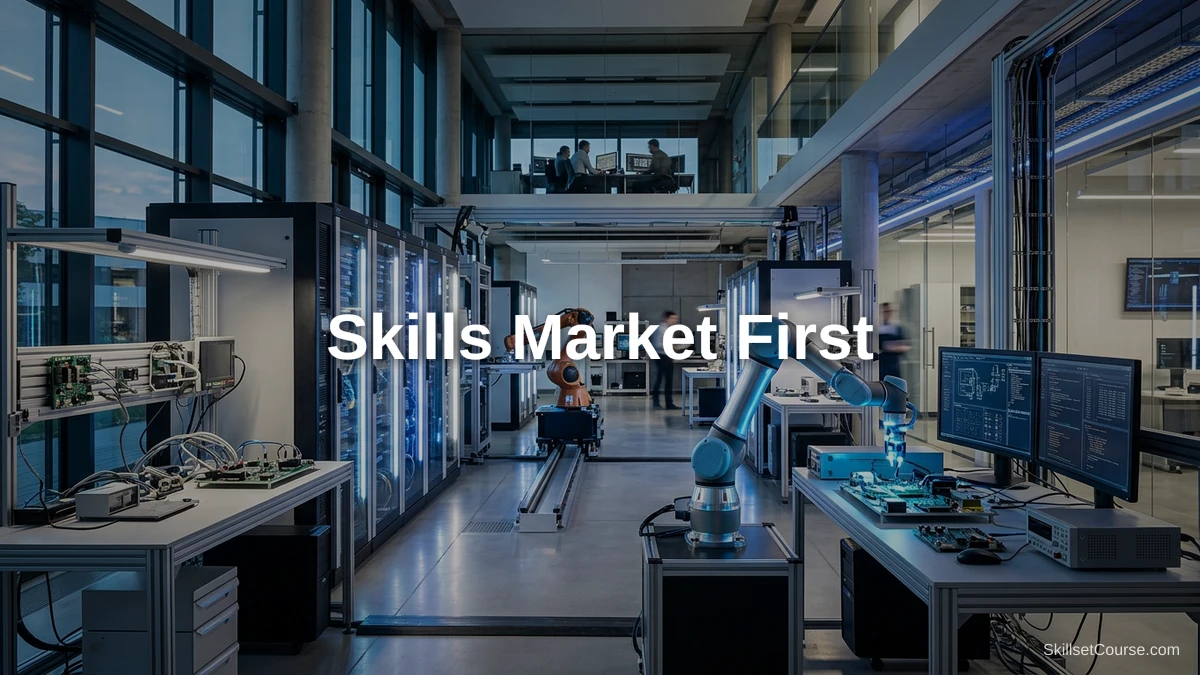
According to a recent report on GitHub, a new AI workflow tool is revolutionizing the labor market by making it skills-first. Dubbed @ai-sdk/[email protected], this tool integrates artificial intelligence to streamline talent development, highlighting a strategic shift towards prioritizing skills training over traditional qualifications.
Key Takeaways
- The launch of @ai-sdk/[email protected] marks a significant shift towards a skills-first labor market, leveraging AI to prioritize practical skills training.
- Skills-first strategies could boost employment opportunities and address skill gaps reported by the World Economic Forum.
- AI-driven training programs can enhance workplace productivity, leading to potential salary increases of up to 20%, according to McKinsey & Company.
- The shift towards skills development is crucial as 85% of jobs that will exist in 2030 have not been invented yet, emphasizing the need for lifelong learning, according to Dell Technologies.
- Skillsetcourse.com offers targeted courses in AI & Class, Robotics & Automation, and Alternative Trades & Healthcare to aid professionals in adapting to this trend.
Why Is Skills-First Labor Market Crucial?
Defining a Skills-First Market
A skills-first labor market shifts focus from traditional degree-based qualifications to the actual skills and competencies that individuals possess. This model is especially relevant in sectors heavily influenced by rapid technological advancements. Such a market allows employers to make hiring decisions based on actionable talents that contribute directly to organizational goals, rather than on a candidate’s educational background.
This approach is bolstered by recent AI technologies that support skills assessment and personalized training paths. By providing tools for widespread skills evaluation, AI empowers both employers and employees to adapt efficiently, ensuring that workforce capabilities align with evolving industry standards.
Impact on Workforce Dynamics
The transformation towards a skills-first labor market is reshaping workforce dynamics by emphasizing practical expertise over formal education. According to a report by LinkedIn, 64% of employers are now prioritizing skills over degrees during the hiring process. This shift is promoting greater diversity and inclusion as candidates from non-traditional backgrounds gain recognition for their competencies.
Moreover, companies are recognizing the value of upskilling and reskilling existing employees to close skill gaps, a necessity highlighted by the World Economic Forum’s projection that more than 1 billion people need reskilling by 2030. Leveraging resources such as the AI Class courses, organizations can cultivate a more robust and adaptable workforce.
The Risks of Ignoring Skills-First Approaches
As the industry progresses, failing to adopt a skills-first approach could exacerbate existing talent shortages. According to the World Economic Forum, there's a 54% gap in critical skills among the current workforce. Organizations that don't prioritize skills development risk lagging behind in innovation and competitiveness.
Furthermore, neglecting this shift could result in higher turnover rates, as employees seek roles that offer growth opportunities aligned with their skill sets. This necessity underscores the importance of investing in comprehensive training programs such as those offered by AI Class courses to upskill effectively.
Opportunities Provided by an AI-Driven Skills Market
AI as a Catalyst for Change
AI acts as a catalyst for creating personalized learning environments, addressing individual skills gaps through adaptive learning paths. According to McKinsey & Company, implementing AI in talent development could increase productivity by 20%. Such advancements also enable employers to continuously retrain staff, aligning workforce capabilities with the fast-paced technological landscape.
By automating repetitive tasks and providing advanced data analytics, AI allows professionals to focus on strategic functions and innovation. Consequently, employees can achieve more fulfilling careers, supported by a work environment that values and develops their unique skills.
The Role of Automation in Skill Development
Automation is revolutionizing the way skills are developed and implemented in the workforce. It bridges the gap between theoretical knowledge and practical application. A study by the Automation World Report indicates that over 70% of businesses are integrating some form of automation to augment human capabilities and foster skill acquisition.
This trend not only enhances efficiency but also encourages a higher level of engagement and skill utilization among employees. Through automation, businesses can achieve significant cost savings and reduce the time required for training programs, enabling a quicker adaptation to new market requirements.
Bridging the Gap for Future Industries
Reports from Dell Technologies suggest that 85% of future jobs have yet to be created. A skills-first labor market facilitates preparing for these unknown roles, focusing on adaptability and ongoing learning. By emphasizing skills over static degrees, professionals are better equipped to navigate shifts in industry demands.
Organizations that use AI to enhance their skills development strategies offer employees a competitive advantage, fostering agility in response to market changes. This dynamic approach ensures a more resilient workforce capable of thriving amid evolving professional landscapes.
Navigating the Job Market Shift with AI Integration
Tailoring Training for Emerging Technologies
As emerging technologies continue to redefine industries, there is an increasing need for tailored training programs that address these advancements. According to the International Data Corporation (IDC), global spending on AI technologies will surpass $110 billion by 2024, illustrating the urgency of integrating such technologies into workforce training.
These tailored programs should focus on providing practical skillsets that align with technological innovations. Organizations that invest in such training initiatives are better positioned to capitalize on technological advancements, thereby securing their competitive edge in the market.
Leveraging Online Learning Platforms
The accessibility of online learning platforms has revolutionized skill acquisition, making it possible for professionals to upskill at their own pace. According to a report by Coursera, learners who enroll in online courses see an average salary increase of 20% upon completion. This significant return on investment underscores the value of leveraging online platforms for skill development.
Platforms like Alternative Trades provide learners with diverse and targeted curricula, empowering them to address specific skills gaps efficiently. By offering courses across sectors, these platforms play a crucial role in preparing the workforce for future demands, highlighting the importance of continuous learning in a rapidly evolving job market.
What This Means for Your Career
- Embrace Continuous Learning: Regularly update your skills through targeted courses on platforms like Robotics program and Alternative Trades.
- Pursue AI-Integrated Skills: Engage in learning opportunities that incorporate AI to remain relevant in your field.
- Flexible Skill Applications: Adapt your skills to varying roles and industries, anticipating future demands.
- Prioritize Skills Verification: Seek certifications and verifiable skill endorsements to enhance job prospects.
Frequently Asked Questions
What is a skills-first labor market?
A skills-first labor market prioritizes skills competencies over traditional degree-based qualifications. This approach allows employers to focus on the practical skills candidates bring to the table, aligning workforce capabilities with dynamic industry needs.
How can I adapt to a skills-first approach?
Focus on continuous learning and skill enhancement. Enroll in courses that offer practical, hands-on experience in burgeoning fields such as AI, robotics, and alternative trades. Regularly updating your skills and gaining certifications can improve your employability.
What role does AI play in skills development?
AI optimizes skills development by providing adaptive training environments and advanced analytics for personalized learning paths. It automates routine tasks, allowing employees to upskill in areas that drive strategic growth and innovation.
Are there resources available to help me transition to a skills-first market?
Yes, platforms like skillsetcourse.com offer courses designed to bridge skills gaps. From AI integration to trade-specific skills, these courses provide the tools needed to excel in a skills-first labor market.
The Bottom Line
As industries worldwide pivot towards a skills-first labor market, professionals and employers must adapt or risk obsolescence. This shift represents not just a trend but an essential evolution in how we perceive qualifications and employability. Embracing this approach ensures a resilient workforce equipped for future challenges.
Skillsetcourse.com stands at the forefront of this transformation, offering comprehensive training across AI & Class, Robotics & Automation, and Alternative Trades & Healthcare. By enrolling in these programs, professionals ensure their skills remain relevant as they navigate an ever-evolving job market.
Transform your career by taking actionable steps towards skill-based growth. Explore our AI Class courses today and ensure you are prepared for the economy of tomorrow.