
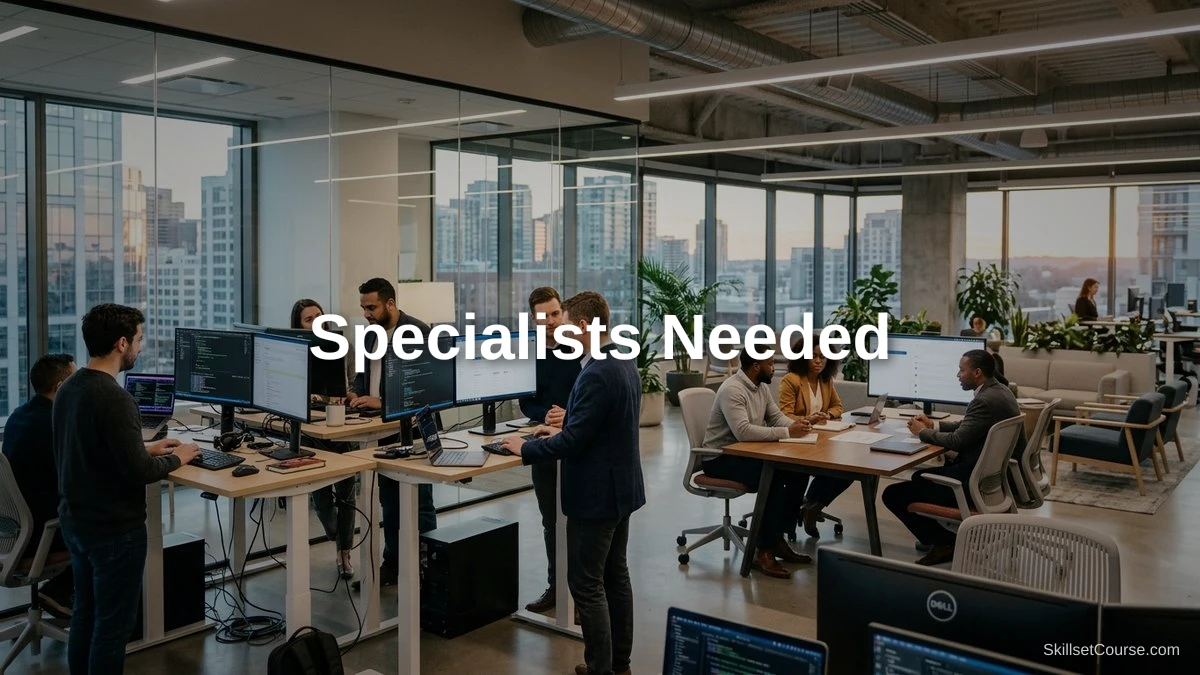
The demand for AI talent continues to skyrocket, as evidenced by HSBC's recent announcement to hire 100 AI specialists in Singapore. As businesses increasingly pivot toward artificial intelligence-based solutions, HSBC’s strategic move is poised to bolster its digital capabilities significantly. According to a News18 report, this expansion aligns with growing industry speculation about AI's role in the future workforce.
Key Takeaways
- HSBC plans to recruit 100 AI specialists in Singapore to enhance its digital capabilities.
- The move underlines the increasing emphasis on AI technologies across global financial sectors.
- Businesses must upskill their current workforce to adapt to AI-driven roles and processes.
- Professionals who fail to adapt may miss out on lucrative job opportunities and career growth.
- This trend suggests a long-term shift towards AI integration in various industries, necessitating strategic upskilling.
Why Is HSBC Investing in AI Talent in Singapore?
Understanding the Strategic Importance
HSBC’s decision to expand its AI workforce in Singapore isn't just a fleeting trend; it's a calculated strategic push to remain competitive. Singapore is increasingly viewed as a hub for technological innovation, making it an ideal location for attracting top talent. According to the World Economic Forum, Singapore ranks highly on the Global Competitiveness Index, particularly in terms of adopting cutting-edge technology.
By concentrating on Singapore, HSBC is positioning itself at the forefront of financial innovation. This move not only strengthens its commitment to advance technologically but also aims to tap into the country's robust infrastructure and talent pool, which are crucial for AI projects that require specialized skills.
The Growing Demand for AI Specialists
The demand for AI specialists is not isolated to Singapore; it is a global trend that is accelerating. The Bureau of Labor Statistics projects that employment in computer and information technology occupations will grow 11 percent from 2020 to 2030, faster than the average for all occupations. This translates into a need for professionals who can navigate and implement AI technologies.
AI specialists typically command salaries that range from $100,000 to $150,000 annually, depending on their expertise and the complexity of projects they manage. Thus, HSBC's hiring initiative is not only timely but also a financially sound investment in human capital.
What Is at Stake for Professionals and Businesses?
The Risk of Falling Behind the Technology Curve
If professionals and businesses do not act now, they risk falling behind in an increasingly AI-driven world. For businesses, failing to hire or upskill their workforce to include AI expertise can lead to losing competitive edge, inefficiencies, and potentially missing out on lucrative market opportunities. According to a Gartner study, AI technologies will be pervasive in almost every new software product and service by 2025, making it essential for businesses to integrate AI into their operations.
For professionals, the stakes are equally high. Those who do not acquire the necessary AI skills risk being replaced by automation or becoming irrelevant in their current roles. This could mean fewer job opportunities, lower salaries, and limited career mobility.
Unlocking New Opportunities Through Upskilling
On the flip side, those who seize the opportunity to harness AI through upskilling can expect significant career benefits. For instance, professionals with AI specialization are not only in high demand but also command premium salaries and are likely to have greater job security. Moreover, fields such as data science, machine learning, and robotics are expected to see the most growth, with job postings significantly above average for other sectors.
Skillsetcourse.com provides various courses that empower professionals to enter the lucrative world of AI, enabling them to capitalize on these new opportunities effectively. For example, their "AI at Work" series provides practical, hands-on training focused on real-world applications.
Can AI and Human Employment Coexist?
The Balance Between Innovation and Employment
A common concern revolves around whether AI will replace human jobs or create new roles that we have yet to envision. AI is poised to transform the nature of work; however, its deployment can coexist with human employment. Rather than replacing jobs, AI can automate repetitive tasks, allowing humans to focus on more complex problem-solving and creative tasks.
Experts agree that AI will change, but not completely eliminate, the job landscape. According to a report by the McKinsey Global Institute, while 30 percent of hours worked globally could potentially be automated by 2030, the net impact on employment would still see an overall growth due to new job creation in AI and related fields.
How Businesses Can Create a Human-AI Work Environment
To successfully integrate AI into the human workforce, businesses must adopt strategies that encourage collaboration between AI systems and employees. This involves redefining roles to incorporate AI technology into everyday tasks. More importantly, it requires a culture shift where AI is seen as a tool to enhance, not replace, human capabilities.
Organizations may consider providing continuous learning opportunities for employees to get comfortable with AI tools and concepts. Skillsetcourse.com's Robotics program offers courses tailored to help professionals understand and work alongside AI systems, ensuring a symbiotic relationship between human and machine.
What This Means for Your Career
- Embrace Lifelong Learning: Continuously seek out educational opportunities to enhance your AI skills and remain competitive in the job market.
- Consider Specialized Training: Invest in specific AI courses that relate to your industry to differentiate yourself from peers.
- Focus on Collaborative Skills: Develop skills that enable you to work effectively with AI systems and colleagues to drive innovation.
- Monitor Industry Trends: Stay informed about developments in AI that could impact your role, ensuring you are always prepared to adapt.
Frequently Asked Questions
What types of AI roles is HSBC likely to focus on?
HSBC is expected to focus on roles such as data scientists, machine learning engineers, and AI project managers. These positions require expertise in developing AI models, interpreting data analytics, and managing AI-specific projects that could drive business decisions and operations.
How can I prepare for a career in AI?
Begin by familiarizing yourself with the basics of AI through introductory courses and literature. Then, consider enrollment in specialized training that addresses your area of interest. Courses offered by platforms like Skillsetcourse.com can provide comprehensive learning paths from foundational to advanced AI concepts.
Will AI replace jobs globally?
AI is expected to change, rather than completely replace, job roles. While automation can take over repetitive tasks, it also creates opportunities for new jobs focused on AI oversight and advanced analytics. The key lies in industries' ability to adapt and innovate alongside AI technology.
Is there career growth potential in AI fields?
Absolutely. Careers in AI are not only in high demand but also offer substantial growth in terms of salary and career advancement. As AI continues to evolve, professionals skilled in AI technologies will find ample opportunities for career progression and leadership roles.
The Bottom Line
HSBC’s initiative to hire 100 AI specialists in Singapore is a clear indicator of the financial sector’s growing reliance on AI technologies. This shift underscores the urgent need for both professionals and businesses to adapt to the AI revolution. Those who embrace this change through strategic upskilling and education are likely to find themselves at the forefront of job opportunities.
Skillsetcourse.com offers the perfect stepping stone for those looking to upskill. With courses tailored for AI, robotics, and alternative trades, you can effectively navigate the challenges and opportunities presented by this transformative era.