
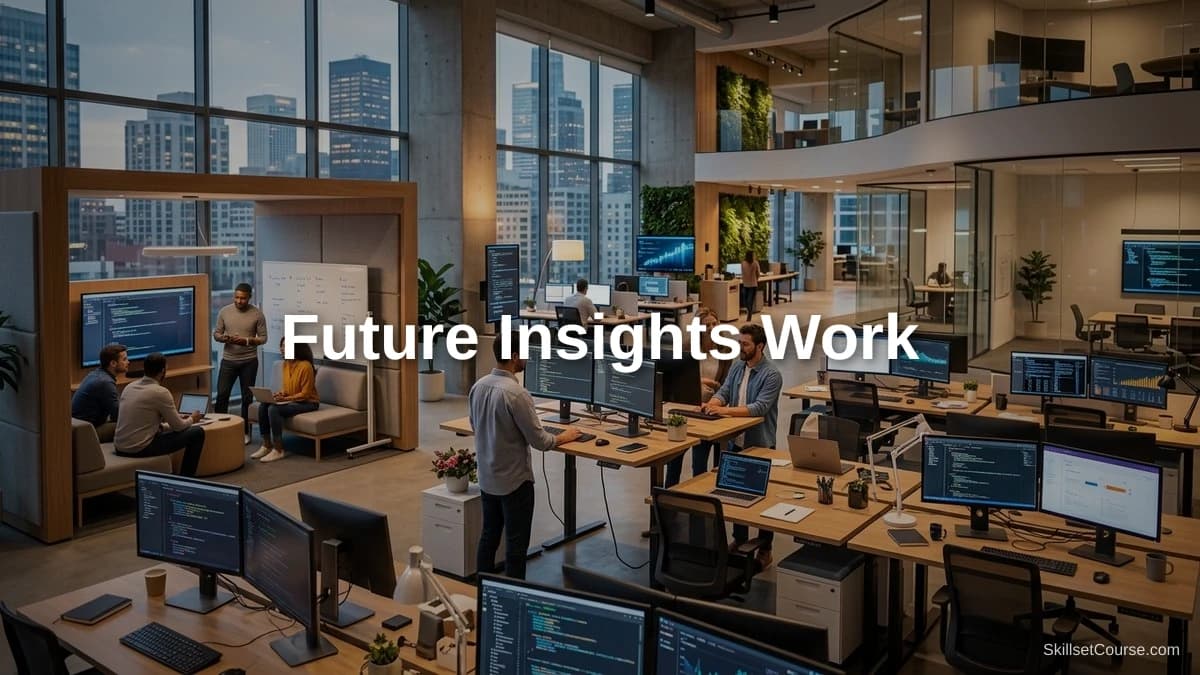
Artificial Intelligence (AI) is rapidly transforming the landscape of work and productivity. According to a report by CNBC, industries embracing AI technologies are experiencing significant shifts in job roles and operational efficiency. This transformation not only impacts existing job structures but also opens up new avenues for career advancement in a technology-driven market.
Key Takeaways
- AI is reshaping industries with a significant impact on job roles, creating both opportunities and challenges for the workforce.
- Adopting AI technologies increases operational efficiency and productivity, demanding new skill sets and adaptability from employees.
- The demand for AI-related skills is soaring, with salaries often exceeding 20% above industry standards as reported by Glassdoor.
- Current and future professionals must focus on continuous learning and upskilling to remain competitive in an AI-driven job market.
- Skillsetcourse.com offers a comprehensive range of courses to help individuals and organizations harness AI effectively.
How Is AI Reshaping Job Roles?
Opening New Career Paths
AI is not just a tool for automating tasks; it is creating entirely new careers. Emerging roles such as AI specialists, machine learning engineers, and data scientists are becoming integral parts of business strategy across various sectors. According to the Bureau of Labor Statistics, employment in AI-related fields is projected to grow by 31% over the next decade.
Professionals in traditional industries are expected to adapt or transition into these new roles. For instance, healthcare workers can move towards AI-driven diagnostics, which are enhancing patient care and streamlining operations. Similarly, individuals in manufacturing and logistics can anticipate shifts to oversee the sophisticated AI systems managing production and supply chains.
Enhancing Current Job Functions
Beyond creating new roles, AI significantly enhances existing job functions by augmenting human capabilities with intelligent systems. Many industries experience improved decision-making processes thanks to AI-driven insights. This integration optimizes performance and enables workforce autonomy. As machines handle data-driven tasks, employees can focus on strategic initiatives and creative problem-solving.
AI technology in industries such as finance and marketing has enabled professionals to analyze data trends in real-time, predicting consumer behaviors and optimizing services. This has streamlined many processes that were traditionally time-intensive. As a result, professionals can allocate time to high-value activities, improving productivity and job satisfaction.
Impact on Automation and Operational Efficiency
Automation is a crucial element of AI's impact on the workplace. The CNBC report highlights that businesses utilizing AI automation experience a 40% increase in productivity due to reduced errors and process acceleration. This transformation leads to cost reductions and improved service delivery, enhancing competitive advantage.
Industries like robotics and industrial automation, as featured in skillsetcourse.com's Robotics program, exemplify AI's role in operational efficiency. By implementing AI-driven automation, companies are optimizing operations from assembly lines to administrative tasks, fostering a more competitive market positioning.
AI's Role in Remote Work and Collaboration
The shift towards remote work has been accelerated by the pandemic, and AI technologies play a pivotal role in ensuring seamless collaboration and productivity. Tools powered by AI, such as intelligent project management software and virtual assistants, are becoming standard in remote work settings.
According to a report by Gartner, 74% of companies plan to permanently shift to more remote work post-pandemic. AI tools facilitate this by managing workflows, improving virtual communication, and maintaining productivity. This evolution opens up opportunities for professionals skilled in managing AI tools and virtual collaboration.
What Skills Are Essential in an AI-Driven Market?
Technical Proficiency in AI Technologies
To thrive in an AI-transformed environment, professionals must develop a deep understanding of AI technologies. This includes skills in machine learning, data analysis, and AI systems operation. Upskilling through specialized courses, such as those offered in skillsetcourse.com's AI Class courses, is essential to remain relevant and proficient.
Moreover, an acute knowledge of AI programming languages like Python or R is increasingly valuable. According to LinkedIn Learning, demand for AI proficiency continues to rise, with more organizations seeking talent capable of deploying AI solutions to improve business outcomes.
Interdisciplinary Knowledge and Adaptability
Building proficiency in AI is just one aspect; interdisciplinary knowledge across various domains, including ethics, data governance, and business strategy, is crucial. Professionals equipped with a well-rounded understanding can implement AI solutions that align with organizational goals and ethical standards.
Adaptability is equally important, as AI technologies and market dynamics rapidly evolve. Professionals should embrace continuous learning and possess the agility to pivot their skills towards emerging trends and technologies.
Soft Skills and Human-Centric Competencies
Despite AI's ability to perform complex tasks, human-centric skills like creativity, emotional intelligence, and communication remain irreplaceable. These competencies enhance the integration of AI into organizational culture and improve team collaboration and innovation.
Employers value a blend of technical and soft skills, making individuals who master both more competitive in the workforce. Courses covering such skills are available through skillsetcourse.com's Alternative Trades, supporting personal development alongside technical growth.
What This Means for Your Career
- Embrace Lifelong Learning: Stay competitive by enrolling in AI-centric courses to keep up with technological advancements and market needs.
- Develop a Growth Mindset: Be open and adaptable to new roles and responsibilities that AI innovation may bring to your industry.
- Balance Technical and Soft Skills: Cultivate both technical acumen and interpersonal skills to enhance your professional profile and career prospects.
- Seek Opportunities for AI Integration: Identify how AI can benefit your current role and propose strategic implementations to demonstrate value to your organization.
Frequently Asked Questions
How is AI impacting job automation?
AI is significantly impacting job automation by enhancing the efficiency and accuracy of various tasks, traditionally handled manually. This allows professionals to focus on more strategic and creative roles. Industries such as manufacturing, logistics, and customer service are witnessing a major shift towards AI-driven automation, leading to increased productivity and operational cost savings.
What are the high-demand AI skills in today’s market?
The current job market highly values skills in machine learning, data analysis, and coding languages like Python and R. AI system integration and interdisciplinary understanding are also sought after, helping bridge technical and strategic roles. As AI adoption continues to rise, proficiency in these areas will become increasingly critical.
How does skillsetcourse.com support AI career growth?
Skillsetcourse.com offers diverse courses tailored to AI adoption and skill development. From foundational AI knowledge to advanced technical training, their AI Class courses provide learners with the tools needed to excel in evolving job markets. The platform’s resources empower individuals to upskill effectively, aligned with industry trends.
What salary advantages exist for AI-related jobs?
Salaries in AI-related professions often surpass the average industry rates. According to Glassdoor, AI specialists can earn up to 20%-30% more than their peers in non-AI roles. This premium reflects the demand for specialized skills and the impact AI has on business efficiency and innovation.
The Bottom Line
AI is undeniably recreating the future of work, emphasizing the importance of strategic adaptation and skill enhancement. As industries continue to integrate AI into their workflows, a proactive approach to learning and personal development is critical. Professionals equipped with both technical and interpersonal skills will find themselves at an advantage in the evolving labor market.
Skillsetcourse.com stands as a pivotal player in supporting this transition, offering an array of courses that cater to various aspects of AI, robotics, and alternative trades. By capitalizing on these resources, individuals can position themselves for success in AI-driven roles and industries. Explore our AI Class courses today to kickstart your journey in harnessing the power of AI for your career advancement.