
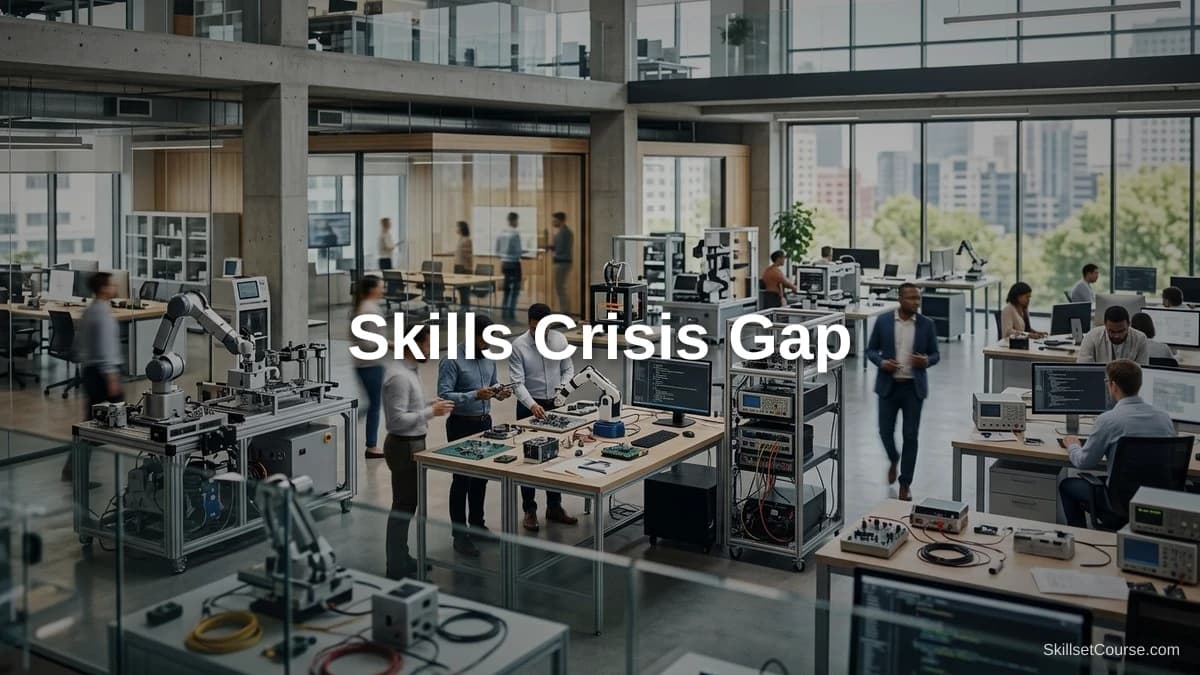
A recent report highlights a stark reality for marketers: 75% of Chief Marketing Officers (CMOs) are grappling with an AI skills gap, a challenge that could derail strategic growth across industries. As technology evolves at a breakneck pace, the digital prowess of marketing teams is lagging dangerously behind, presenting both a problem and a directive for immediate action. This skills gap not only jeopardizes marketing efficacy but poses a threat to competitive edge in today’s data-driven landscape.
Key Takeaways
- 75% of CMOs report significant AI skills gaps within their marketing teams, according to the Austin American-Statesman.
- This deficiency threatens to undermine marketing strategies and overall competitive positioning in all sectors.
- Bridging the skills gap is vital for leveraging AI to enhance customer engagement and improve campaign performance.
- Skillsetcourse.com offers targeted courses in AI and class programs to help marketing professionals close this gap effectively.
- Investment in AI education is crucial for long-term growth and adaptability in the rapidly evolving marketing environment.
How Relevant is The AI Skills Gap in Marketing?
Current Landscape and Immediate Impacts
The question of AI integration in marketing is no longer about choice but necessity. More than ever, companies are harnessing the power of artificial intelligence to analyze consumer data, guide decision-making, and tailor personalized marketing efforts. According to the Bureau of Labor Statistics, demand for roles requiring AI expertise is expected to grow by 31% by 2030. Yet, current capabilities within marketing teams often fall short, leaving CMOs in a precarious position.
With a staggering 75% of CMOs recognizing this gap, the pressure mounts to enhance internal skillsets quickly. When marketers lack the necessary AI capabilities, the risk is not just inefficient marketing but a significant loss of market share. This gap hinders the ability to conduct complex data analysis, implement predictive modeling, and dynamically adjust strategies to align with evolving customer needs.
Challenges Beyond Technology Adoption
Adapting to AI-driven marketing setups calls for more than just deploying technology. It necessitates a profound understanding of machine learning, data analytics, and automation processes. Unlike traditional marketing approaches, AI demands a new kind of literacy. A Gartner report states that 53% of marketing leaders identified an inadequate skillset as a primary obstacle for AI in their operations. This disparity suggests potential missteps in strategy execution, leading to inefficient campaign results and poor ROI.
Marketing teams must therefore prioritize learning and development initiatives to remain relevant. By equipping teams with these critical skills, businesses can not only enhance their marketing effectiveness but also simplify how they navigate complex consumer landscapes.
What Drives the AI Skills Gap? Exploring Underlying Factors
The Rapid Evolution of Technology
The speed at which AI technologies develop poses a formidable challenge for even the most adaptive organizations. As marketing technology stacks become increasingly sophisticated, the inherent complexity requires skills that aren’t always covered in standard marketing curricula. According to a McKinsey & Company report, only 19% of marketers express confidence in their analytical competencies - an essential component for AI-driven success.
Given this complexity, the onus is on companies to not only provide real-time learning resources but also to integrate these advancements into everyday operational processes, thereby embedding AI into the company's DNA.
Resource Limitations and Budget Constraints
Resource constraints form a significant barrier to closing the AI skills gap. While large corporations may have the budgets to invest in intensive training programs and hire specialized talent, medium to small enterprises often find themselves struggling. The economic backdrop and budget limitations exacerbate this challenge, leaving many marketing teams inadequately prepared.
Skillsetcourse.com offers a plethora of AI Class courses that cater to different organizational levels, providing cost-effective solutions for companies looking to foster these skills without exorbitant spending.
Resistance to Change and Organizational Inertia
Even as the potential of AI becomes undeniable, resistance to change remains a consistent hurdle. In traditional organizations, especially those with entrenched systems and mindsets, pushing for a transition to an AI-centric approach involves overcoming significant inertia. Teams accustomed to standard marketing tactics might find the shift to AI-driven strategies both intimidating and uninvited.
Overcoming such challenges requires a cultural shift that places value on continuous learning and flexibility. Organizations must encourage an innovative mindset, where embracing new technologies is part of the corporate ethos.
Effective Solutions: Upskilling and Reskilling Your Marketing Team
Strategic Learning Pathways
Addressing the AI skills gap involves identifying critical skill areas and implementing strategic learning pathways. This includes targeted training programs focusing on actionable skills like data analytics, machine learning, and AI integration in marketing strategies. Our Robotics program and Alternative Trades offer frameworks that marketing professionals can adapt to suit their continuous learning needs.
Job rotation, mentorships, and peer-learning opportunities also enhance knowledge transfer and practical application, ensuring that theoretical learning translates into effective performance improvements.
Utilizing External Partnerships and Resources
Partnering with educational platforms and tech companies can provide marketing teams access to the latest AI tools and best practices. Through external collaborations, companies can expose employees to industry-leading techniques and foster an environment focused on innovation.
Skillsetcourse.com provides essential resources and partnerships that enable marketers to both comprehend and apply AI methodologies effectively, ensuring a smoother transition and upskilling process.
Evaluating Progress and Outcome Measurement
It is crucial to monitor and evaluate the impact of upskilling initiatives through continuous feedback and outcome measurement. Establishing clear, measurable objectives allows organizations to track improvements in marketing efficiencies and ROI. Benchmarking against industry standards provides insights into whether training programs are fulfilling their purpose or require adjustments.
Organizations should continue to refine these programs based on emerging trends and performance outcomes, ensuring that their teams remain on the cutting edge of AI advancements.
What This Means for Your Career
- Adapt Quickly: Marketers must develop an aptitude for AI technologies to retain competitive job roles and avoid skill obsolescence.
- Engage in Continuous Learning: Enroll in AI-focused courses through platforms like skillsetcourse.com to enhance your expertise and stay industry-relevant.
- Seek Niche Expertise: Specializing in areas such as AI-driven content creation or data analytics improves career advancements and marketability.
- Network with AI Experts: Collaboration with AI professionals can open avenues for learning and partnerships, facilitating mutual growth and knowledge sharing.
Frequently Asked Questions
What defines an AI skills gap in marketing?
An AI skills gap in marketing refers to the lack of essential competencies needed to effectively utilize AI technologies within marketing strategies. This gap can stem from deficiencies in data analysis, machine learning, predictive analytics, and automated campaign management. Addressing these gaps is critical for developing impactful marketing operations.
How can companies bridge the AI skills gap effectively?
Bridging the AI skills gap involves a multifaceted approach, including investing in comprehensive training programs, fostering a culture of innovation, and leveraging external partnerships for knowledge exchange. Continuous learning and adapting to industry changes are key to effectively aligning skills with emerging technology trends.
What risks do organizations face if the AI skills gap isn't addressed?
Failing to address the AI skills gap can result in lost competitive advantages, inefficient marketing processes, inability to capitalize on consumer data insights, and ultimately, reduced profitability. Organizations may struggle with customer engagement and fail to execute targeted marketing strategies effectively.
How does skillsetcourse.com support marketing professionals in bridging this gap?
Skillsetcourse.com provides an array of tailored courses and programs designed for marketing professionals seeking to enhance their AI competencies. From AI Class courses to practical training in robotics and automation, our platform equips learners with the skills required to excel in the AI-driven marketing landscape.
The Bottom Line
The 75% AI skills gap among CMOs is a clarion call for organizations to prioritize immediate, strategic interventions. Bridging this divide is not only crucial for enhancing operational efficiency but also instrumental in sustaining competitive market positions in the long run.
Marketing professionals must proactively invest in their education, leveraging resources like skillsetcourse.com to sharpen AI skills and seize growth opportunities in a rapidly evolving digital world. Whether through AI classes, robotics programs, or alternative training routes, closing the skills gap means securing the future relevance of both individuals and organizations.
Ready to enhance your AI skills and propel your career forward? Explore our comprehensive AI Class courses today and take the first step towards bridging the gap and securing your place in the future of marketing.