
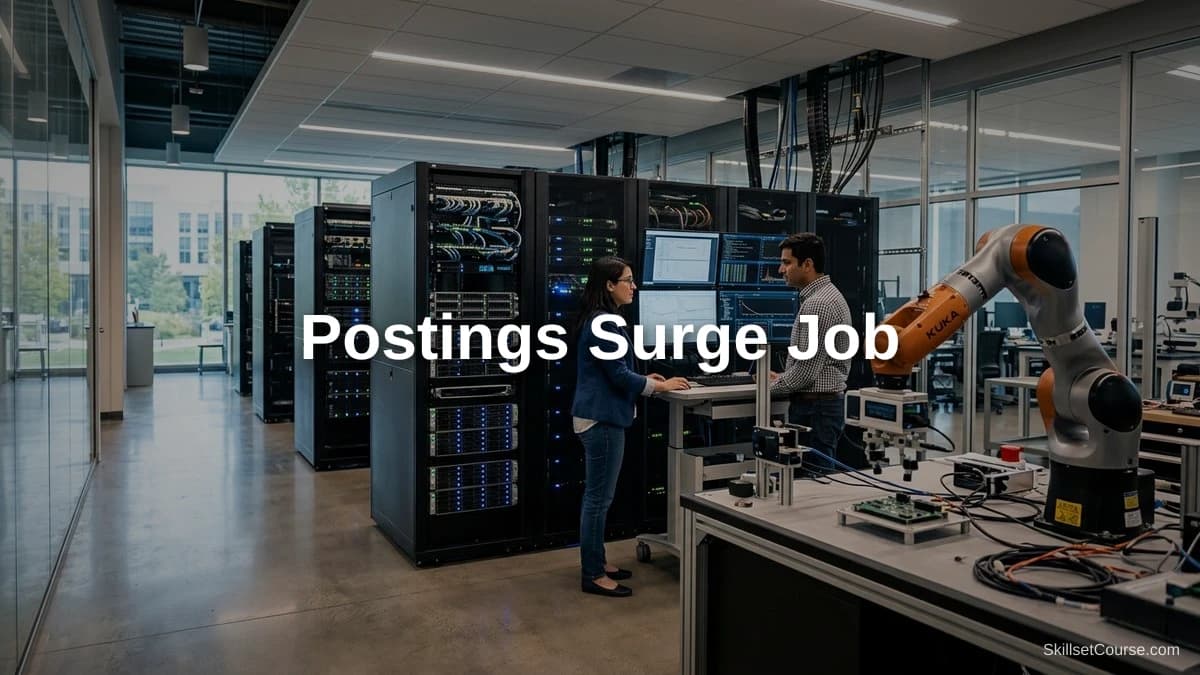
The demand for artificial intelligence (AI) expertise has surged dramatically, as evidenced by a nearly threefold increase in AI job postings this year alone, according to Staffing Industry Analysts. This explosive growth underscores the urgent need for professionals equipped with AI skills and highlights a shift in the labor market that prioritizes technological proficiency.
Key Takeaways
- AI job postings have increased nearly threefold in 2023, reflecting strong demand for AI skills.
- Companies across industries are prioritizing AI integration, creating numerous career opportunities.
- Upskilling in AI and related technologies is crucial for job security and advancement.
- Professionals risk being left behind if they do not adapt to new technological demands.
- Skillsetcourse.com offers specialized courses to bridge the skills gap in AI and automation.
Why Are AI Job Postings Increasing So Rapidly?
Rise in AI Integration Across Industries
The integration of AI across various industries is a major driver behind the increase in job postings. From healthcare to finance, AI applications are transforming business processes, enhancing efficiency, and delivering superior outcomes. A report from McKinsey & Company shows that 70% of companies are expected to adopt AI by 2030.
AI is not just a tool but a catalyst for innovation, enabling companies to offer personalized services and optimize their operations. This shift necessitates a workforce skilled in AI technologies, leading to a surge in demand for professionals who can navigate and implement complex AI systems.
Technological Advancements Fueling Demand
Technological advancements in AI, including machine learning, neural networks, and natural language processing, have expanded AI's capabilities and applications. As these technologies become more accessible and affordable, businesses are investing heavily in AI initiatives. According to Gartner, AI-derived business value is forecast to reach $3.9 trillion in 2022, indicating the scale of investment and potential growth in this sector.
This increased investment and rapid advancement have opened new roles in AI strategy, development, and implementation, making it imperative for professionals to stay updated with the latest skills and knowledge.
Pressure to Maintain Competitive Edge
As companies recognize the strategic advantage AI provides, the pressure to adopt these technologies to maintain a competitive edge in the market has increased. Organizations are not only looking to streamline operations but also to harness AI for strategic decision-making and predictive analytics. This need for competitive parity drives companies to seek out skilled AI professionals who can deploy these advanced technologies effectively.
Consequently, professionals who are proficient in AI-related skills are increasingly valued, resulting in a dramatic uptick in job opportunities within this field.
What Happens If Professionals Do Not Adapt?
Risk of Job Obsolescence
Failing to update one’s skills in AI and related technologies can lead to job obsolescence. As AI continues to automate tasks traditionally done by humans, those without AI skills may find their roles diminished or replaced. The World Economic Forum predicts that by 2025, machines will perform more tasks than humans, underscoring the necessity for adaptation.
Professionals who remain static in their skillsets will likely struggle to find opportunities in an increasingly automated job market.
Loss of Competitive Advantage
Individuals who do not upskill may also lose their competitive advantage in the job market. As more professionals gain proficiency in AI, those without such skills may find themselves overlooked for promotions and new roles. This not only impacts career progression but also earning potential.
According to PayScale, AI specialists earn significantly higher salaries, with median earnings exceeding $112,000 annually in the U.S. Professionals without these skills may miss out on these lucrative roles.
Missed Opportunities for Growth and Innovation
AI offers immense potential for growth and innovation across various sectors. Professionals who do not engage with these technologies risk missing opportunities to be at the forefront of transformative projects and industries. The lack of engagement with AI learning can curb professional and personal growth, as well as contributions to company success.
This gap can leave employees playing catch-up as advancements in AI and technology continue at breakneck speed.
How Can Professionals Position Themselves for AI Opportunities?
Engagement with AI Education and Training
Engaging in targeted AI education and training can provide professionals with the skills needed to thrive. Skillsetcourse.com offers AI Class courses designed to equip individuals with practical knowledge and applications of AI. These courses can help bridge the skills gap in AI and automation.
Having foundational knowledge of AI technologies is crucial, and structured learning pathways can facilitate proactive career positioning for emerging opportunities.
Hands-On Experience with AI Projects
Gaining practical experience through hands-on AI projects is vital for understanding real-world applications. Whether in current employment or through freelancing opportunities, implementing AI solutions on actual projects can solidify one's understanding and ability to innovate.
Professionals are encouraged to participate in industry hackathons, contribute to open-source AI projects, or take on challenges offered by educational institutions to gain practical experience.
Networking and Professional Growth
Networking with industry professionals can provide insights into emerging trends and opportunities in AI. Joining professional associations, attending AI conferences, and engaging in online forums can open doors to new connections and job prospects.
By staying connected with like-minded professionals, individuals can build a solid support network that facilitates continuous learning and career advancement.
What This Means for Your Career
- Investing in AI skill development is crucial for remaining competitive in the job market where technology-savvy roles are proliferating.
- Pursuing AI education from skillsetcourse.com or similar platforms can offer certifications and practical experience needed to secure lucrative job roles.
- Staying informed on AI trends ensures readiness for the evolving demands of the workforce.
- Proactively seeking AI opportunities, through hands-on projects or networking, positions professionals for success.
Frequently Asked Questions
What specific AI skills are in demand?
Skills such as machine learning, deep learning, natural language processing, and data analytics are highly sought after. Proficiency in programming languages like Python and experience with AI frameworks such as TensorFlow and PyTorch are also valuable. Upskilling in these areas can significantly enhance employability.
How does AI impact the job market?
AI is redefining job roles and creating new opportunities while automating tasks previously performed by humans. This shift necessitates reskilling and adapting to new processes. The demand for AI-skilled professionals has risen steeply, leading to increased job postings and higher salary offerings in tech-driven roles.
Can non-technical professionals transition into AI roles?
Yes, non-technical professionals can transition into AI roles by acquiring foundational knowledge through AI Class courses. Many programs cater to beginners and offer hands-on training in AI applications, ensuring a smoother transition for individuals from diverse backgrounds.
What career opportunities exist for AI professionals?
AI professionals can explore careers including data scientist, machine learning engineer, AI developer, and AI research scientist, among others. Continuous learning and experience can lead to advanced roles such as AI project manager or chief AI officer, offering substantial career progression and financial rewards.
The Bottom Line
The nearly tripled increase in AI job postings this year highlights the growing demand for AI expertise in the job market. As industries worldwide harness the power of AI, professionals equipped with these skills stand to gain significant career benefits. However, failing to adapt could leave individuals behind as the technological landscape evolves.
To position oneself advantageously in this dynamic environment, it is essential to engage in continuous learning and upskill through targeted programs such as those offered by AI Class courses. These educational paths not only bridge the skill gap but also open doors to rewarding career opportunities in the burgeoning field of AI.