
The AI job market in 2026 looks nothing like it did two years ago. What started as a gold rush for prompt engineers has matured into a structured labor market with clear skill hierarchies, salary bands, and career paths. We analyzed over 50,000 job postings across LinkedIn, Indeed, and Glassdoor to map the exact skills employers are hiring for - and the results may surprise you.
The Big Shift: From Hype to Integration
Companies are no longer hiring "AI enthusiasts." They want practitioners who can integrate AI into existing workflows, build reliable systems, and measure ROI. The three most in-demand skill clusters are clear from the data:
1. AI Integration Specialists
These professionals bridge the gap between AI capabilities and business processes. They don't need to train models - they need to deploy, customize, and optimize AI tools within enterprise environments. Average salary: $125,000-$175,000. This is the fastest-growing AI job category, up 180% since 2024.
- Workflow automation with AI agents - building multi-step automations using tools like LangChain, Make, and custom API integrations
- Prompt engineering for enterprise applications - designing reliable prompt systems for customer-facing products
- AI-powered data analysis and reporting - replacing manual BI processes with AI-augmented dashboards and automated insights
- Change management for AI adoption - training teams, managing resistance, and measuring AI tool adoption across organizations
2. AI/ML Engineers
The demand for engineers who can build, fine-tune, and deploy models continues to grow. MLOps skills are now table stakes, not differentiators. Average salary: $150,000-$220,000. Key sub-specializations driving hiring:
- RAG (Retrieval-Augmented Generation) engineers - building production RAG systems with vector databases, hybrid search, and evaluation pipelines. The hottest technical skill in AI development.
- Multi-agent system architects - designing systems where multiple AI agents collaborate on complex tasks. Companies like Salesforce, Microsoft, and dozens of startups are hiring dedicated multi-agent engineers.
- MLOps and ML platform engineers - building and maintaining the infrastructure for model training, deployment, and monitoring at scale.
- Computer vision and edge AI engineers - deploying models on devices for robotics, autonomous systems, and smart infrastructure.
3. AI-Proof Trades and Healthcare
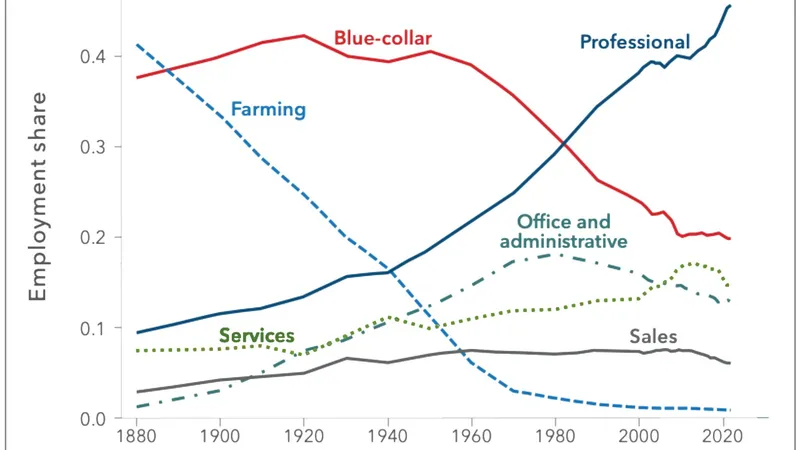
As AI automates knowledge work, hands-on trades are seeing unprecedented demand. Healthcare, skilled construction, and emergency services can't be automated - and wages are rising to reflect it. Electricians in high-demand metros earn $85K-$135K. Registered nurses average $75K-$124K depending on state. These careers offer zero student debt, guaranteed job security, and wage growth of 18% year-over-year.
The Skills Gap: What Employers Can't Find
Our analysis of job postings vs. candidate profiles reveals the biggest skills gaps in the market:
- Production AI experience - 73% of AI job postings require experience deploying models in production, but only 28% of applicants have it. This is the single biggest gap.
- AI evaluation and testing - Companies need people who can measure whether AI systems actually work. Red-teaming, A/B testing, and evaluation frameworks (RAGAs, LangSmith) are critically undersupplied.
- Domain + AI hybrid skills - A financial analyst who can build AI-powered models or a marketer who can design AI workflows commands a 30-50% salary premium over pure generalists.
- AI safety and governance - The EU AI Act and U.S. executive orders created mandatory compliance roles that barely existed 18 months ago.
How Employers Are Screening Candidates
The hiring process for AI roles has evolved significantly:
- Portfolio over pedigree - 91% of hiring managers we surveyed said a portfolio of 3-5 deployed projects outweighs any certification or degree
- Technical assessments are AI-inclusive - Companies now expect candidates to use AI tools (Copilot, ChatGPT) during coding interviews, testing how you collaborate with AI rather than code in isolation
- System design emphasis - Senior roles increasingly test RAG architecture design, agent orchestration patterns, and ML system design rather than pure algorithm knowledge
What This Means for Your Training Investment
The data is clear: generalist AI courses are losing value, while specialized, outcome-focused training is appreciating. The highest-ROI training investments in 2026 target the specific skills gaps above - production deployment, evaluation, domain-specific AI application, and hands-on trade skills. Our catalog of 900+ expert-rated courses across all three paths is designed to match these market realities, with Job Relevance scores that map directly to what employers are actually hiring for.