
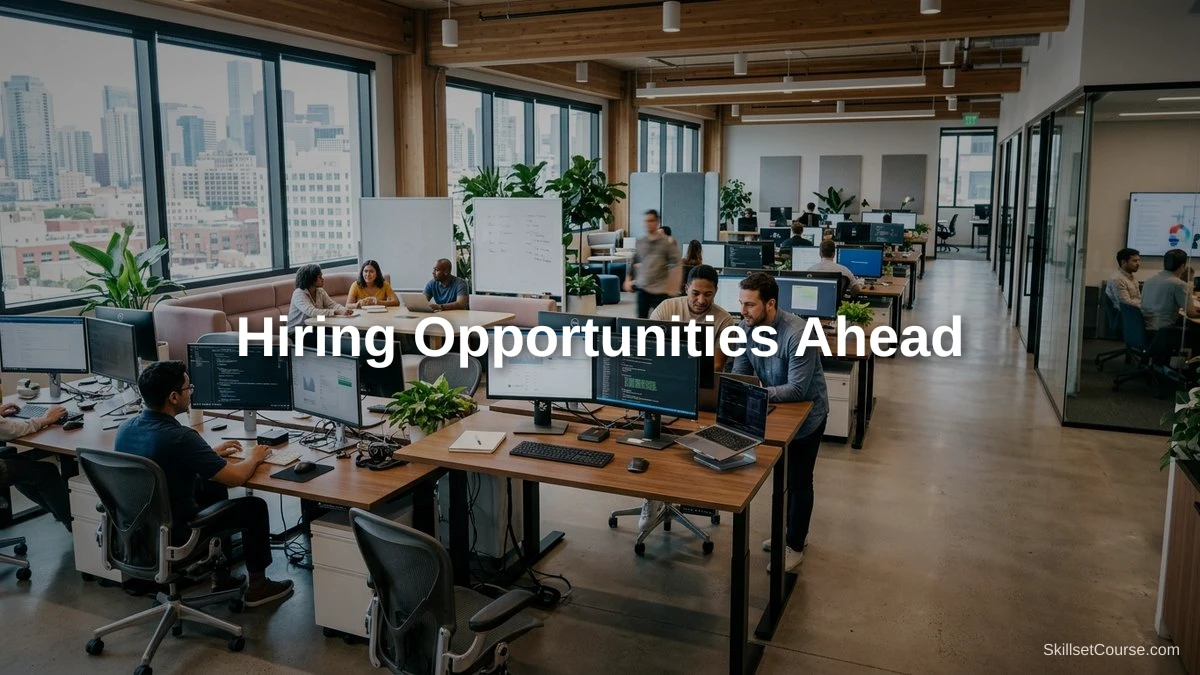
The conversation surrounding AI's impact on the workforce has long been dominated by fears of massive job losses. However, according to a Fortune article on the 'skinny hamburger, fat bun' dilemma, AI is not only reshaping jobs but also creating new opportunities. By 2026, AI is expected to generate a broader range of positions across various sectors, as businesses adapt to a blend of human and machine collaboration.
Key Takeaways
- AI's evolution is not just about job replacement but also about job creation, particularly in tech-driven roles.
- The problem of a 'skinny hamburger, fat bun' refers to the uneven distribution of opportunities across different job sectors.
- By 2026, industries that integrate AI are likely to see a 5-10% job growth, providing diverse opportunities for skilled workers.
- Upskilling and reskilling will be crucial for workers to seize new job opportunities in an AI-driven market.
- Skillsetcourse.com offers targeted AI Class courses that aid professionals in adapting to these changes.
How AI is Reshaping the Job Landscape
Understanding the 'Skinny Hamburger, Fat Bun' Problem
The term 'skinny hamburger, fat bun' metaphorically describes the labor market's current predicament. It highlights the imbalance where high opportunity in AI-related fields contrasts with stagnant growth in traditional sectors. As AI advances, jobs like data analysts, AI trainers, and automation specialists see increased demand, whilst roles in sectors less adaptable to AI face stagnation.
According to the World Economic Forum, by 2026, roles requiring advanced AI competencies will grow by 35%. Meanwhile, traditional, less automated job sectors might only see a 4% increase, indicating an urgent need for workers to transition to tech-enhancing roles to thrive and remain competitive.
Emerging Roles Driven by AI
AI's integration into industries is generating a variety of new roles that did not exist even a decade ago. From ML-powered robotics engineers to AI ethics consultants, these positions require specialized knowledge and are less likely to be automated in the near term. The Bureau of Labor Statistics projects that tech-centric occupations will witness a growth rate nearly twice that of traditional jobs by 2026.
Top emerging roles include AI specialists in health care, where smart systems are now aiding in diagnostics and patient management, making it imperative for healthcare professionals to upskill through relevant courses such as Alternative Trades & Healthcare programs.
Sector Variability in AI Job Creation
While the tech industry is at the forefront of AI job creation, non-tech industries are gradually catching up. For instance, agriculture is utilizing AI for precision farming, creating roles focused on AI-driven analytics. According to McKinsey & Company, the use of AI in agriculture could double by 2026, necessitating professionals skilled in both AI and farming techniques.
Additionally, the integration of AI in robotics and automation is reshaping manufacturing and field operations. Robotics program courses are instrumental for individuals aiming to join or remain relevant in such sectors.
The Future Outlook
The future of employment across all sectors is increasingly dependent on their ability to incorporate AI technologies. A PwC study indicates that AI's full potential could contribute up to $15.7 trillion to the global GDP by 2030. This projection underlines the importance of immediate action in learning AI skills and competencies.
Industries lagging in adopting AI could face stagnant growth or potential declines, emphasizing the need for workers in these sectors to proactively seek training. Skillsetcourse.com offers comprehensive resources that align with these demands, helping workers pivot successfully into AI-enhanced roles.
What Impacts Job Market Trends?
Why AI Matters More Than Ever
The rise of AI highlights both opportunities and challenges for the labor market. By 2026, AI is expected to contribute an additional $15 trillion to the global economy. This growth highlights the importance of workers adapting to AI technologies that augment tasks and generate efficiency.
In industries where AI is used effectively, companies report up to 40% increased productivity. Therefore, understanding and implementing AI-driven strategies is crucial, emphasizing the need for continuous learning and skill enhancement.
The Importance of Upskilling for AI
As AI becomes integral to business operations, the requirement for skilled professionals-those who can bridge the gap between AI technology and human operation-increases. Upskilling allows employees to move into new roles created by AI implementation, reducing the risk of displacement.
Programs like those offered by skillsetcourse.com provide valuable resources for professionals seeking to enhance their skills in AI. The availability of courses tailored to AI strategy and intelligence offers pathways for career advancement.
How Businesses Need to Adapt
Organizations must recognize the shift and prepare their workforce for AI integration. This includes initiating AI training programs, encouraging internal mobility, and fostering an environment of innovation.
Companies that proactively invest in upskilling and reskilling their workforce can reduce the skills gap and enhance their competitive advantage, ensuring their employees are well-equipped for the evolving job landscape.
The Role of Policy and Education in Shaping the Future
Governments and educational institutions play a pivotal role in responding to the changing job landscape. Incorporating AI and digital literacy into national education curriculums is essential to prepare future generations. This approach ensures a workforce capable of supporting and advancing AI technologies across various sectors.
A collaborative effort between public and private sectors can help to mitigate potential job displacement by facilitating reskilling programs and providing incentives for continuous learning. By adapting educational strategies to meet the demands of an AI-driven economy, we can bridge the skills gap effectively.
What This Means for Your Career
- Identify growth sectors: Research which industries are currently growing due to AI and consider transitioning or expanding your skillset to align with these sectors.
- Enhance your tech skills: Participate in AI courses or workshops to build highly sought-after skills, increasing employability in AI-related roles.
- Stay informed: Follow industry reports and technological advancements to anticipate future job trends and opportunities across different sectors.
- Network with professionals: Engage with communities, attend industry conferences, and connect with AI specialists to stay ahead of AI trends and insights.
Frequently Asked Questions
What is the 'skinny hamburger, fat bun' problem?
This concept captures the imbalance in the labor market where AI-related fields are abundant in opportunities (the 'bun'), while traditional roles have fewer prospects (the 'burger'). This affects how workers need to shift their skills towards tech innovation and automation.
How does AI create new jobs?
AI creates jobs by expanding existing roles with new functions and by completely new roles such as AI ethics officers, AI-driven content strategists, and smart system designers. These roles focus on enhancing AI technologies and ensuring ethical implementation across various industries.
What sectors are most impacted by AI?
Tech sectors, naturally, are most impacted, but other industries like healthcare, finance, agriculture, and manufacturing are also significantly affected. Each is seeing the introduction of specific technologies that require new skill sets and job roles.
How can I prepare for AI-related job opportunities?
Stay proactive by upskilling through relevant educational programs and courses that focus on AI. Building a strong network with industry professionals and participating in internship or trainee programs in tech areas can provide practical insights and experiences.
The Bottom Line
The narrative around AI and job loss is shifting; it's time we focus on the potential for AI to create a robust labor market with innovative job roles. As we approach 2026, the need to adapt by acquiring new skills has never been more critical.
Professionals eager to thrive in this changing landscape should consider enhancing their expertise through AI Class courses or explore our Robotics program to tap into burgeoning sectors.
Skillsetcourse.com provides numerous pathways tailored to ensure that employees and organizations are prepared to meet the challenges and opportunities presented by AI, allowing them to stay competitive and innovation-driven in a dynamic market.