
Learn Data Engineering
4 expert-rated courses covering Data Engineering. Compared by rating, price, difficulty, and job relevance so you can pick the right one.
Data Engineers are in high demand across industries such as tech, finance, healthcare, and retail, where the ability to manage and analyze large datasets is essential. The average salary for a Data Engineer in 2026 is expected to be around $120,000, with the demand for this role growing at a rate of 15-20% annually.
Catalog analysis updated . Ratings are independent editorial scores. Read the rating methodology.
Key Facts About Data Engineering
- 1Data Engineering involves building data pipelines, data warehouses, and data lakes to ensure efficient data storage, processing, and analysis.
- 2Popular tools used in Data Engineering include Apache Spark, Apache Kafka, Apache Airflow, and cloud-based services like AWS Glue, Azure Data Factory, and Google Cloud Dataflow.
- 3Key skills for Data Engineers include proficiency in programming languages like Python, SQL, and Scala, as well as expertise in data modeling, data transformation, and data visualization.
- 4Data Engineers work closely with Data Scientists, Business Analysts, and other stakeholders to ensure that data is accessible, reliable, and aligned with business objectives.
- 5The average time to learn Data Engineering can vary, but with dedicated practice and the right courses, individuals can become job-ready within 6-12 months.
Top Data Engineering Courses
Data Engineering, Big Data, and ML on GCP
Master data engineering on Google Cloud including Spark, Kafka, data pipelines, data warehousing, and machine learning deployment.
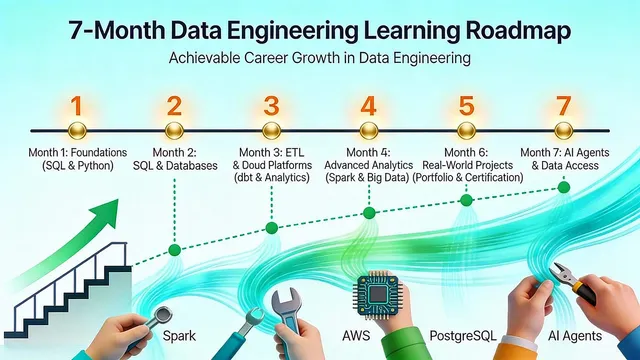
Azure Data Engineering End-to-end Course 2026
Learn multiple tools in Azure data engineering stack including Data Factory, Databricks, Synapse, and more.

The Data Engineer Bootcamp 2026
Master Data Engineering, Build Scalable Pipelines, and Land a High-Paying Job. Learn with a Silicon Valley Data Engineer.
Data Engineering for Beginners: Learn SQL, Python & Spark
Master SQL, Python, and Apache Spark (PySpark) with Hands-On Projects using Databricks on Google Cloud.
Pro Tips for Learning Data Engineering
- #1Start with a strong foundation in programming, database management, and data modeling.
- #2Stay up-to-date with the latest tools and technologies in the Data Engineering ecosystem.
- #3Gain practical experience by working on personal projects or contributing to open-source data engineering initiatives.
Why Learn Data Engineering?
- Become a key player in data-driven decision-making and business transformation.
- Enjoy a lucrative career path with high demand and strong salary prospects.
- Develop a versatile skill set that can be applied across a wide range of industries.