
Will AI replace Interior Designers? The Risk Score Explained
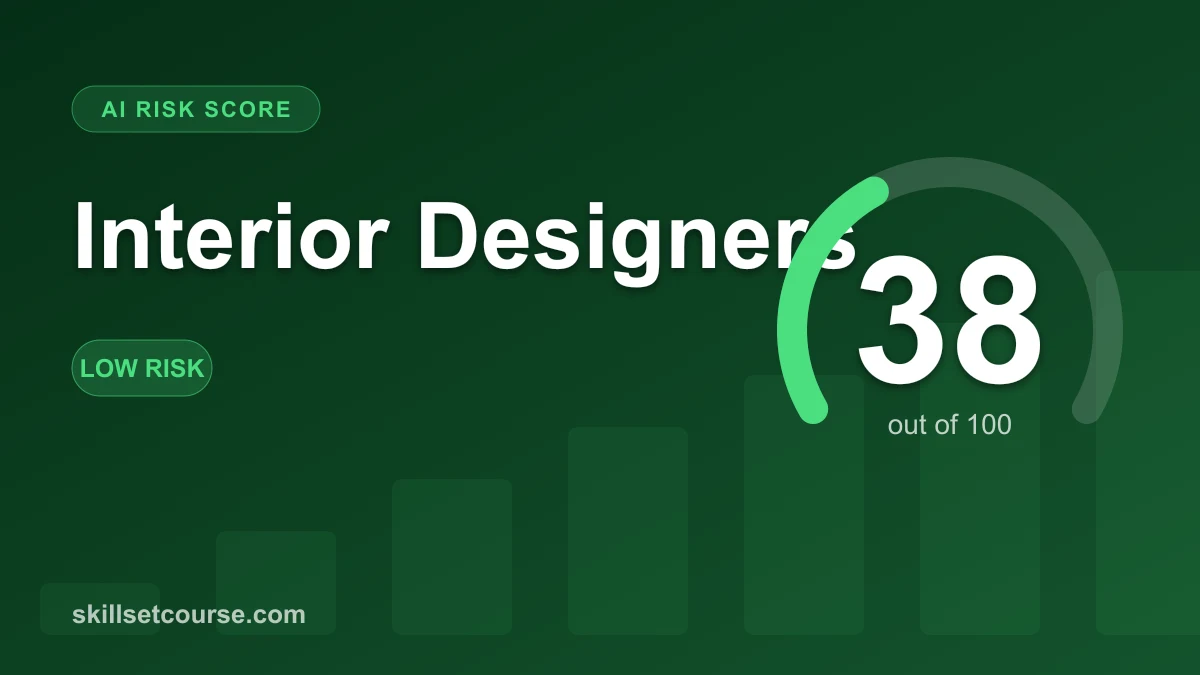
Interior Designers face a low risk of AI replacement with a risk score of 38/100. The role's key functions like strategic planning and creativity have a low automation probability (15-30%).
Interior Designers face a low risk of AI replacement with a risk score of 38/100. This score reflects the role’s intrinsic reliance on strategic planning and creativity, which have a low automation probability of 15-30%. According to the Bureau of Labor Statistics, the essence of interior design involves nuanced artistic judgment and complex decision-making that AI currently struggles to replicate. While AI tools such as Autodesk’s Revit and SketchUp’s AI capabilities help streamline drafting processes, they do not replace the human touch required for truly personalized design solutions.
The low risk score is indicative of AI’s capabilities being primarily in support roles - assisting with repetitive tasks rather than fundamentally altering designer responsibilities. Strategic planning remains largely human-led due to its need for abstract thinking and bespoke client relationships. Interior Designers often craft unique environments based on personal preferences, lifestyle considerations, and vocational needs, functions that are not easily susceptible to automation. Skillset Course helps professionals mitigate AI impacts by recommending courses in AI basics and prompt engineering, enhancing the adaptability of Interior Designers to technological shifts without compromising their core creative inputs.
Interior Designers are advised to embrace AI tools for enhanced efficiency without fear of displacement. By leveraging AI's strengths such as data-driven insights from tools like the Adobe Creative Cloud, designers can enhance their existing skill set rather than replace it. Skillset Course offers targeted learning stacks to support this integration, empowering designers to capitalize on AI advancements while maintaining their value in the industry. For those considering ways to secure their roles against AI impacts, exploring Skillset’s AI-impact decision tools may offer valuable insights.
Which Interior Designer tasks are most vs least automatable?
Routine tasks like data entry can be automated (85-95%), whereas complex design solutions and strategic planning have a low automation probability (15-30%), keeping Interior Designers' roles largely protected.
In examining which tasks within the interior design profession are most and least automatable, we differentiate between routine versus complex responsibilities. Routine tasks such as data entry and basic reporting have an automation probability of 85-95%. Tools such as Monday.com and Airtable automate scheduling and project tracking, thus reducing manual data handling. On the other hand, sophisticated design solutions and strategic planning are safeguarded by their low automation probability of 15-30% due to the creative innovation and bespoke craftsmanship they necessitate.
Task Automation in Interior Design
| Task | Automation probability | Verdict |
|---|---|---|
| Data entry | 85-95% | Highly Automatable |
| Pattern recognition in structured data | 70-85% | Moderately Automatable |
| Design drafting and visualization | 50-65% | Partially Automatable |
| Strategic planning | 15-30% | Rarely Automatable |
Interior designers’ roles inherently demand the translation of client visions into tangible designs through artistic creativity and spatial awareness. Tools like Fohlio and Morpholio focus more on enhancing visualization and ideation processes, yet they are complementary rather than cannibalistic to the human-led core functions. For designers seeking to balance task automation with core role retention, exploring alternative career insights can be beneficial.
How is the day-to-day role of Interior Designers changing?
Interior Designers are integrating AI for pattern recognition and client visualization, but rely on human-led creativity and bespoke interactions, keeping the core role resilient.
The day-to-day role of Interior Designers is evolving with the integration of AI, demanding adaptability to retain professional relevance. AI tools such as Archistar’s AI-driven visualization aid interior designers by providing efficient client engagement through compelling imagery and virtual representations. However, the essence of interior design remains grounded in human creativity and interpersonal interaction. This evolution reflects a transition where AI augments but does not replace interior designers.
Evolving Practices in Interior Design
- Enhanced client visualization through AI-powered renderings facilitates more engaging presentations.
- Augmented reality applications like Roomle allow clients to interact with design layouts in real-time, making decision processes more dynamic.
- Data analysis tools aid designers in understanding client preferences and predicting trends, adding evidence-based backing to creative decisions.
As AI technologies proliferate, interior designers should focus on integrating them as supportive tools to enhance workflow efficiency and client communication. Skillset Course emphasizes training in AI alongside traditional skills to future-proof professionals against potential obsolescence. By exploring expert-guided learning options, designers can enrich their adaptability, demonstrating AI-proof career strategies through continuous professional development. The expanding role underscores an opportunity for interior designers to elevate their existing talents with technological synergy, rather than facing displacement.
Which AI tools should Interior Designers master now?
Interior Designers should master tools like AutoCAD for drafting and Photoshop for presentations to enhance creativity, benefitting from AI in customization and design efficiency.
Interior Designers aiming to stay ahead should master AI-enhanced design tools such as AutoCAD and Photoshop. AutoCAD facilitates precision in drafting designs, crucial for detailed room layouts. Photoshop remains vital for creating compelling visual presentations that communicate design concepts to clients. Both tools increasingly incorporate AI features that streamline customization and augment creative capabilities, providing competitive advantages in the modern design landscape.
Customization and Design Efficiency
AI has significantly impacted how Interior Designers approach customized design solutions. Tools like ColorSnap Visualizer harness AI to help designers and clients visualize color palettes directly on images of rooms, enhancing personalization options. Similarly, Planner 5D utilizes machine learning to propose layout options based on client preferences, improving efficiency without sacrificing creativity.
These tools allow designers to quickly produce client-tailored solutions and foster creativity by handling repetitive tasks. For more details on deciding the right tools for your career, explore our learning stack guide.
Which skills are rising vs losing value in Interior Design?
Skills in ML/AI basics and LLM tools are increasingly valuable (+$15K-25K), whereas standard drafting skills face lower demand due to AI advancements in pattern recognition.
As the field of interior design evolves with AI integration, certain skills are becoming more valuable while others face obsolescence. Understanding this shift is essential for designers looking to future-proof their careers.
Rising Skills
Proficiency in machine learning (ML) and AI basics is increasingly vital, offering a salary premium of $15K-25K. Interior Designers who can skillfully integrate AI designs and collaborate with AI systems like Planner 5D and Houzz Pro are highly coveted. Mastery of large language models (LLMs) is also beneficial, as these models assist in generating design narratives and client communications.
Skills Facing Decline
Skills tied to standard drafting and manual pattern recognition are losing value due to advancements in AI technology that handle these tasks more efficiently. Portfolios emphasizing purely technical drawing without AI integration may fall behind. To optimize your skills effectively, consider visiting our course finder.
What are realistic adjacent pivots for Interior Designers?
Interior Designers could pivot to roles like creative directors or specialized consultants, which stress human interaction and bespoke solutions less vulnerable to automation.
In response to the deepening role of AI in interior design, professionals are exploring alternative career paths that align with their expertise in creativity and human interaction. These pivots aim to capitalize on unique human skills beyond the reach of automation.
Role of Creative Director
Shifting to the role of a creative director is a viable pivot for Interior Designers. This position emphasizes leadership in guiding comprehensive design projects, requiring strategic vision and the ability to oversee AI-augmented workflows. The interpersonal aspect remains invaluable, setting it apart from AI-driven fields.
Specialized Consultancy
Another viable pivot is specialization consultancy, focusing on niche areas such as sustainable design or ergonomic layout planning. These specializations rely heavily on personalized engagement and bespoke solution crafting, safeguarding them from AI replacement.
For more insights on alternative career paths in interior design, explore our career pivot page.
Frequently asked questions
Do Interior Designers have a future despite AI?
Yes, Interior Designers have a future as AI tools enhance their capabilities rather than replace their creativity and strategic planning roles.
Will Interior Design be in demand in the future?
Yes, Interior Design demand remains strong as bespoke, client-specific solutions continue to be a necessity beyond AI capabilities.
Can AI replace Interior Designers like Architects?
While AI assists both professions, Interior Designers remain less replaceable due to greater emphasis on creative and personalized tasks.
Are Interior Designers 100% safe from AI?
No job is 100% safe from AI, but Interior Designers face low risk due to indispensable elements like creativity and client interaction.
What AI challenges do Interior Designers face?
Interior Designers encounter AI challenges in automating routine tasks but benefit from tools enhancing visualization and client engagement.
Which jobs will AI replace in five years?
Jobs with high routine and predictable patterns, like data entry and basic reporting, are more susceptible to replacement by AI.
The bottom line
Interior Designers are positioned favorably against AI disruption with a benchmark AI risk score of 38/100, indicating low replacement risk. The most critical action for these professionals is to embrace AI tools such as AutoCAD and Photoshop that enhance creative processes while developing strategic planning skills. Emphasizing continued education in AI integration will ensure designers remain competitive. For expert advice on navigating these industry changes, visit our professional insights page.